Los Angeles County’s district attorney cut 16 felony eavesdropping counts against LAPD Officer Daniel Flores to misdemeanors on Wednesday, a shift that makes diversion the likely path out of a case that once carried the threat of prison. If a judge approves that route, Flores would have to meet court-ordered terms and conditions for about a year before the case could be dismissed.
The change matters because Flores was not accused of making a stray recording. He made more than 100 recordings last year inside the LAPD’s recruitment division, capturing officers making racist, homophobic and sexist remarks, including a comment about a Latino Dodgers pitcher dying because he “ate too many tacos,” another invoking stereotypes about Black people and watermelon and basketball, and one calling a young recruit “rapeable,” according to court records.
For Flores, the announcement answers the immediate question that has hung over the case since the charges were filed: whether he was looking at felony exposure that could have meant up to 13 years in prison. By reducing the counts, Nathan Hochman signaled that prosecutors are no longer treating the matter as a case headed for the harshest punishment, even as they keep it in the criminal system and leave the final decision to a judge.

The legal fight has always turned on how California’s two-party consent rule applies inside a police workplace. Flores’s attorneys have argued that the recordings were lawful under the California Invasion of Privacy Act because he was acting in the course of his duties as a police officer, and Flores filed a complaint with the LAPD’s inspector general’s office while saying he hoped the officers making the remarks would face discipline. That is why his supporters describe him as a whistle-blower, not a lawbreaker.
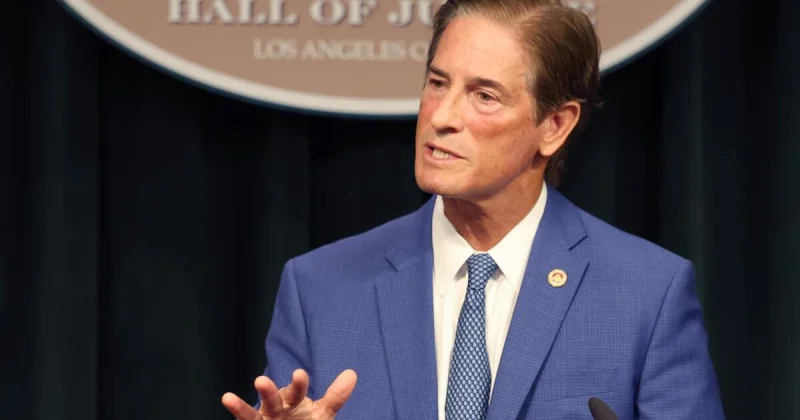
Hochman has said the case was meant to send a “crystal clear” message about stopping illegal investigative practices, not to discourage officers from reporting misconduct. He also said the message about protecting whistleblowers had not been clearly understood. Karen Bass called the filing “insane” and argued that it deterred police from exposing corruption and misconduct within their ranks, drawing a sharp line between the office’s stated goal and the politics surrounding the prosecution.
The next step now rests with the courtroom. Alan Jackson said he expects to seek a diversion agreement in downtown on Thursday, and the judge will decide whether Flores is placed under conditions that must be satisfied for about a year before the case can disappear. If that happens, the prosecution that began as 16 felonies ends not with prison, but with dismissal — and with a warning still hanging over how far police officers can go when they record what they hear inside their own department.