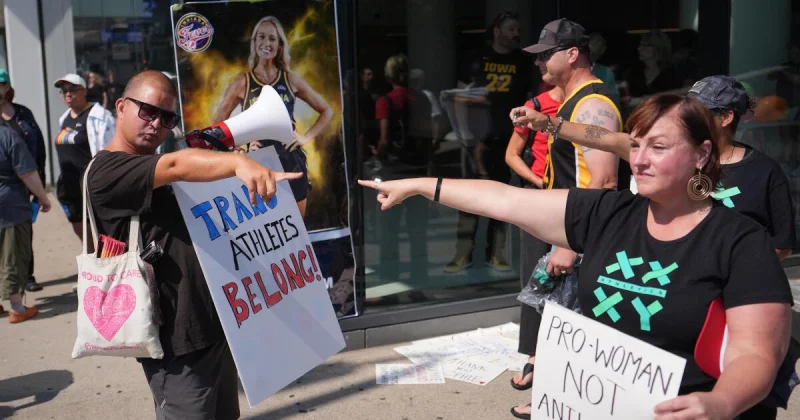
Enes Kanter Freedom and Royce White asked last week to be declared eligible for the 2027 WNBA draft, turning a women’s league roster question into the latest political fight over transgender athletes. White, who recently lost the Republican primary for the Senate seat being vacated by retiring Minnesota Sen. Tina Smith, said he should be allowed to play in the women’s league and suggested legal action could follow if the request is blocked.
The demand is landing now because the WNBA has become a target in a broader campaign over women’s sports, even though no transgender players are slated to join the league. White told News, “I identify as sometimes identifying as a woman for purposes of … professional basketball,” and posted pictures of himself wearing a wig while saying he was embracing his “feminine era.” That makes the move less a lane to the league than a statement aimed at the fight around it.
White’s comments also fit a political moment that has been building since February 2025, when President Trump signed the executive order “Keeping Men Out of Women’s Sports,” written to withhold federal funding from organizations that do not follow the administration’s view that sex is the gender assigned at birth. Last month, Sophie Cunningham said in an profile that “biological men” should not compete in women’s sports and called that “common sense” to protect young girls and Title IX. The same argument was echoed by Karoline Leavitt, who said, “It’s completely ludicrous that anyone could support that,” and added that it was even more striking because Cunningham, “a female athlete herself,” was speaking up for the view that men should not play in women’s sports.
The contradiction is hard to miss: the league says there are no transgender players on the way, but the issue is being treated like an emergency anyway. Last week, the WNBA criticized efforts to create a false narrative about transgender women playing in the league, pushing back against a controversy that has been amplified more for political attention than for any change in roster reality.
What happens next is simple enough. If the request for draft eligibility is denied, White and Freedom have already suggested they could take legal action, which would keep the league at the center of a culture fight it did not create and has not yet been forced to answer on the merits.