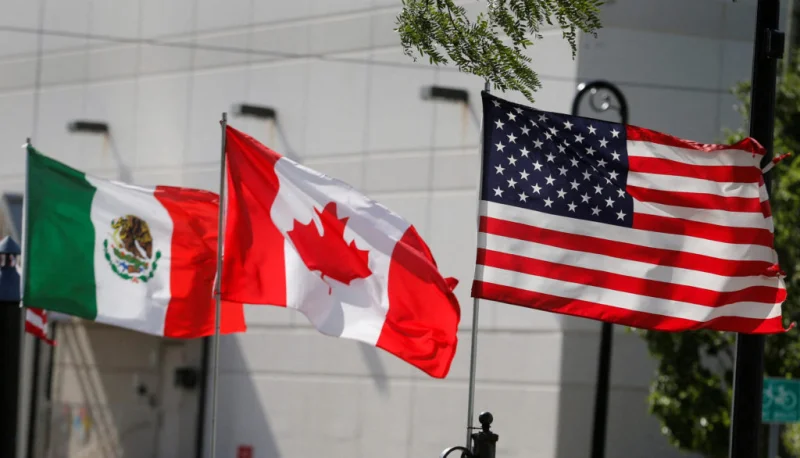
Canada and the United States were racing toward a 12:01 a.m. Wednesday deadline on Monday, trying to avert Donald Trump’s threatened 50% tariffs on $20 billion worth of Canadian products. The talks were still alive late in the day, but the clock was already doing the heaviest work in the room.
Mark Carney, speaking in French on Monday, said the negotiations were “very intense and delicate” and added that this was not the time to discuss them in public. He and Trump also spoke by phone Monday afternoon about the trade talks, a sign that the issue had reached the top of both governments’ agendas with only hours left before the deadline.
The immediate stakes are easy to measure. Trump’s threatened duties would hit products that range from hockey sticks to tongue depressors, putting pressure on a border that carries nearly 330,000 people and $2 billion worth of goods every day. Canada sends nearly 72% of its goods exports to the United States, which means even a narrow tariff fight can move quickly into factories, farms and shipping routes on both sides of the line.

The dispute fits a relationship that has never been simple. The United States and Canada have wrangled for decades over trade, including softwood lumber and U.S. access to Canada’s protected dairy market. The two countries also share a long military history, with Canadian soldiers fighting alongside Americans in Afghanistan after 9/11, even as Trump has repeatedly made inflammatory comments about turning Canada into America’s 51st state.
That is why the latest round has produced so much pressure and so little public detail. Ryan Majerus said he did not think either side really wanted the tariffs to come into effect, and that there was “a pretty strong push on both sides to find an off ramp” after months of hard bargaining. He said the U.S. wants Canada to buy more American military equipment, including F-35 fighters, and to take part in Trump’s Golden Dome missile defense, while also seeking more access to critical minerals that would reduce reliance on China.
The Canadians, meanwhile, want relief from U.S. tariffs on steel and aluminum as well as softwood lumber, a product Washington says gets unfair government subsidies. That leaves the talks with a narrow path: if the two sides can settle enough of the trade dispute to satisfy Trump before 12:01 a.m. Wednesday, the tariff threat can be pulled back; if not, Canadian exporters enter another round of damage control in a market they cannot easily replace.
For now, the most important fact is not that the two governments are talking, but that neither appears eager to let the deadline pass without a deal. The next move belongs to the clock.