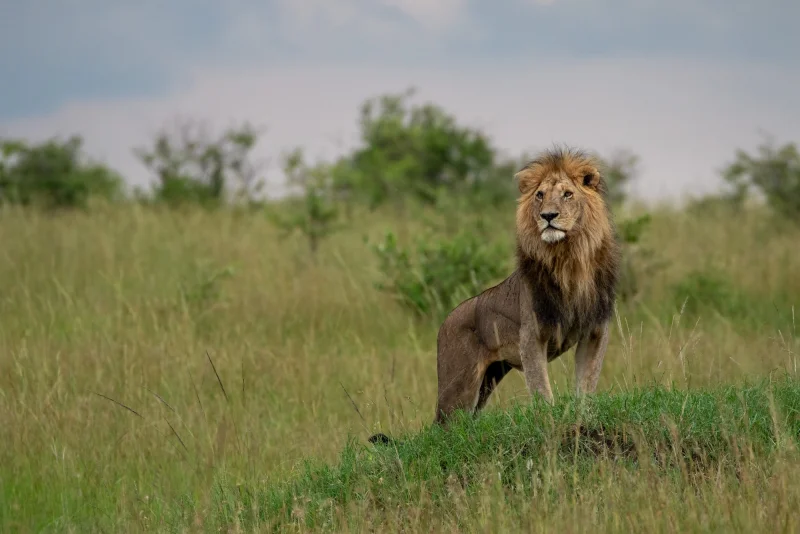
Sophie Darlington spent four years following one lion in the Maasai Mara, and that long watch is what gives National Geographic’s Lion its shape now. The film tracks Kio from a young cub into a powerful leader, with loss, exile and rivals marking the path between those points.
That is why the project is drawing attention today: Darlington says the story only works because it was given time. Four years, she said, let her get stuck in and find the truth, so the film could have a real beginning, middle and end instead of feeling like a passing glimpse of wildlife. For readers searching for Lion now, the attraction is not just the subject but the method — one lion, one life, and a camera patient enough to follow it through.

Darlington described Kio’s life as the story’s proof of concept. National Geographic’s Lion follows him as he grows, and the arc depends on seeing how a young animal becomes something larger while the pride changes around him. She said the females are the heart of the pride, while males eventually reach an age when they leave, and younger males are pushed out and forced to make their own way. That is the kind of detail a shorter shoot would miss, and it is why the film feels less like a snapshot than a full natural history record.
The production also had to work around the habits of the subject itself. Darlington said lions are most active at dawn and dusk, which meant the team needed equipment that could handle low light without flattening the image. It used ARRI Alexa for the long lens and RED V-RAPTOR for the GSS and the Cineflex, but she said the point was never to let technology set the agenda. Her view was simple: quality matters, but the story matters more, and the tools had to serve Kio’s life rather than overwhelm it.
That balance is what makes the film unusual. Streaming, Darlington said, has changed everything because viewers can sit with episode one, two, three and four and take in every chapter of the book. Jon Favreau built the project that way on purpose, and the format gives the story room to breathe. What remains unresolved is the same thing that gives the film its force: the line between what happened in Kio’s four years and what was preserved on camera, a gap Darlington says only time could close.