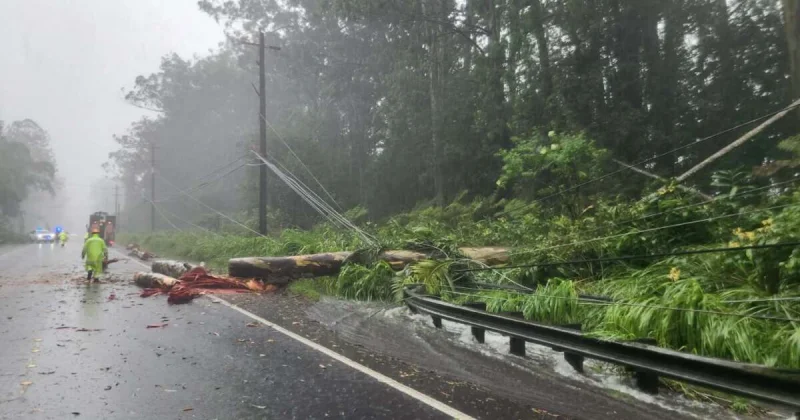
Tropical storm Lala left one person dead on Hawaii’s Big Island and knocked out power to as many as 111,000 customers after sweeping past the island with heavy rain and wind. The storm also damaged at least 100 homes and bridges, turning a downgraded system into a costly and dangerous blow.
Jeanne Kapela said the scale of the damage was plain. “It’s complete and utter devastation,” she said, adding that “families have lost their homes; the entire community is impacted.” Her remarks matched the scene across the Big Island, where flood waters damaged or swept away about 100 homes and six bridges and where rainfall over 48 hours topped 3.5ft in some areas.
The storm matters most today because crews are still trying to restore power and assess what can be reopened. Hawaiian Electric said utility workers were working to get service back after outages spread across the island, while Hawaii’s governor, Josh Green, estimated the statewide damage in the hundreds of millions of dollars. The storm also hit Oahu, where the Honolulu fire department had logged more than 600 weather-related responses by noon local time Sunday, including 147 reports of downed trees, roofs blown off, downed power lines and one swimmer who had to be rescued.
Even after Lala was downgraded from a hurricane to a tropical storm in the early hours of Sunday, it still brought enough force to collapse parts of a major highway in the Big Island’s south-east overnight, blocking road access to Pahala, where the region’s only hospital is located. Officials said a woman reported missing in Naalehu was found dead on Monday, but they did not explain how she died, leaving one of the most serious questions from the storm unanswered.
The National Hurricane Center said Lala could become a hurricane again by Wednesday, a reminder that the system may not be finished with Hawaii yet. The islands have not been hit by a major hurricane since 1992, when Hurricane Iniki caused at least six deaths and billions of dollars in damage, but Lala has already shown that a weaker classification can still leave behind deadly flooding, damaged infrastructure and prolonged outages.