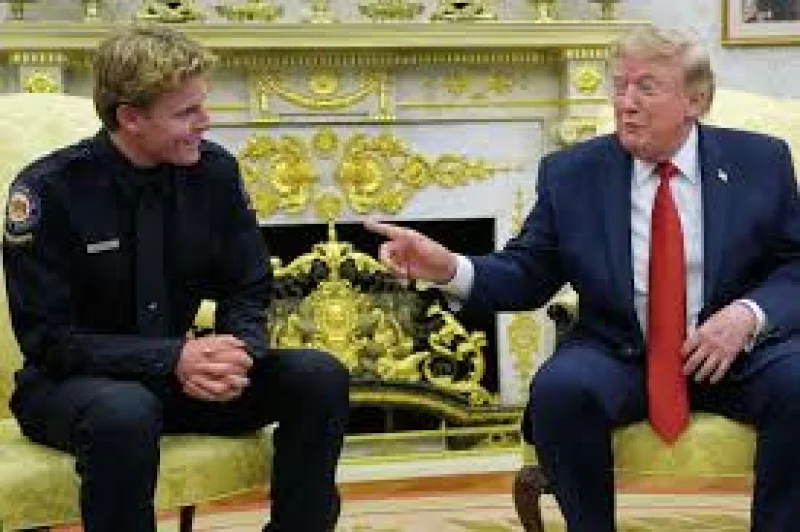
President Donald Trump met Ryder Williams and Nathaniel Rai at the White House on Monday, bringing the teen lifeguard face to face with the boy he pulled from the ocean in a rescue that raced across social media. The meeting in the Oval Office turned a frightening California beach incident into a public salute, with Trump praising Williams as a hero and saying it was "an honor" to be with him.
The attention did not arrive by accident. Williams, 16, was on duty as a California State Parks lifeguard on July 25 when Rai was swept into the water by a wave at a California beach. The video that captured the rescue showed a 16-year-old lifeguard battling 8-10 foot surf waves and rip currents to reach a 10-year-old boy, and that clip helped push the story into the national conversation before the White House invitation followed.

The sequence in the water was fast and messy, not the clean heroics often seen in short videos. Williams rushed to get ahold of Rai while another lifeguard helped pull them both to shore, a reminder that the rescue depended on more than one person and more than one set of hands. Williams has said he hopes to become a firefighter, and he described the moment the way trained rescuers often do: they fall back on preparation, not instinct alone.
That was the point Williams returned to inside the Oval Office. He said lifeguards are trained to handle dangerous moments as best they can, and he urged people to look out for those around them and help where they can. Trump said he had spoken with Rai and told Williams that what he did was incredible and that everybody saw it, while Sumit Rai, Nathaniel's father, thanked Williams and said he was beyond grateful.
The White House meeting closed the loop on a rescue that first gained momentum when the video caught the eye of Eric Trump and later drew wider attention after it was discussed on Fox & Friends. What comes next is less about another ceremony than about what this moment leaves behind: a public reminder that the most dramatic saves at a California beach are still made by people who train for the seconds when the water turns dangerous.