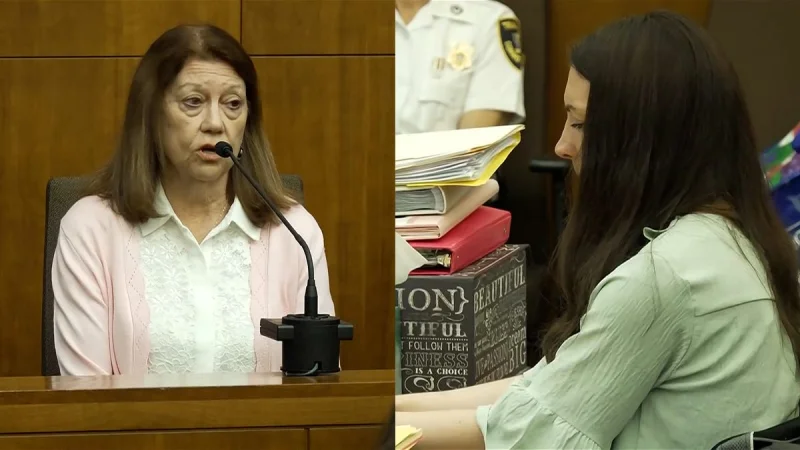
Paula Musgrove told Lindsay Clancy’s murder trial on Monday that her daughter was anxious, barely sleeping and begging for company weeks before the deaths of her three children. The defense called Musgrove as its third witness after prosecutors rested early on Aug. 17.
That testimony put a family voice in the center of a case now in its fourth week, with Clancy fighting murder charges in the January 2023 strangulation deaths of Cora, Dawson and Callan in Duxbury, Massachusetts. She has pleaded not guilty, and her lawyers are trying to show she lacked criminal responsibility because of postpartum depression and psychosis.
Musgrove, who said she is retired after working for Weight Watchers, told jurors that she and her husband, Mike Musgrove, a recently retired school photographer, have been living out of hotels to stay near Lindsay Clancy. She described her as a loving, dedicated and fun mother, and said becoming a mother was the best thing that ever happened to her. Musgrove added that Clancy always wanted children and would do anything for them.

But the picture Musgrove painted of a happy family in the summer of 2022 broke down by October. She said Patrick Clancy and Lindsay Clancy seemed very happy then, but she later noticed that Clancy had become very anxious. Musgrove said her daughter was worried about going back to work because Callan was having trouble taking a bottle, and that she planned to ask for an extension on leave.
The turning point came on Oct. 20, 2022, when Clancy texted her mother and asked her to come stay. In the message, Clancy said she was really sick, that something was wrong, and that she had horrible insomnia all night. She said the medicine her doctor prescribed for anxiety seemed to have made things worse, that she did not know how she was going to get through the day, and that it was scary because she did not want to be alone. Musgrove traveled from Connecticut to Duxbury that same day and stayed for a week.
That week is at the center of one of the trial’s hardest questions: what, exactly, was happening to Clancy before the killings. Musgrove’s account gives jurors a direct family description of a woman who was outwardly loving but privately unraveling, and it leaves the defense to connect those symptoms to its claim of postpartum illness. The next step in the case was not immediately clear after her testimony ended.