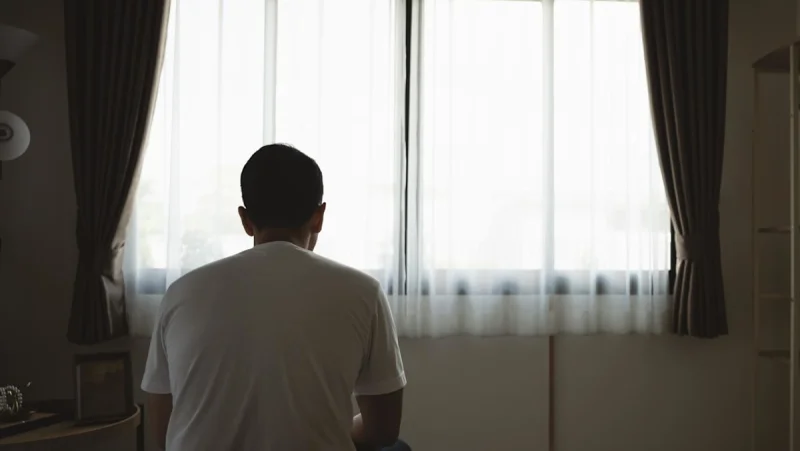
One in 10 young Americans aged 23 to 29 spent no time face to face with another person on an average day in 2023. The number is stark not because it captures a rare day of solitude, but because it shows how far social life has split among young adults since the pandemic.
The measure comes from the American Time Use Survey, which uses detailed diaries to track how and with whom people spend every minute of a randomly selected day. That kind of accounting matters because it does not rely on memory or mood. It records the day as it was lived, minute by minute, and in this case it shows a generation that did not move in one direction after the pandemic. Some rejoined ordinary social life. Others did not.
John Burn-Murdoch said the figure was the kind of statistic that can stop even a veteran reporter in his tracks, and the reason is plain. The most socially connected quarter of young people used to spend 87 per cent of their day with other people. During the pandemic that fell to 78 per cent, then rebounded to 83 per cent. The most isolated segment tells the opposite story. It used to still spend roughly a third of the day around others. Now it spends essentially zero of the day around others.

That gap is the real story. The pandemic did not flatten young adults into one shared experience; it widened the distance between those who entered it with strong social networks and those whose lives were already fragile. Pandemic lockdowns, social distancing and the shift to online education and work reduced contact for many people, but the impact did not fade evenly once restrictions eased. For the most connected group, the loss was painful but temporary. For the most isolated group, the social floor seems to have dropped out entirely.
The broader pattern reaches beyond the United States. An upcoming report by the Institute for Public Policy Research says the portion of young Britons with not a single close friend rose from one in 100 in 2015 to one in 20 today. In western Europe, the share of young adults neither in work nor education who met up with friends or family less than once a month climbed from 7 per cent before the pandemic to 14 per cent in 2021, and has stayed elevated. Taken together, the figures point to a long, uneven decline in socialising among young people, with the sharpest losses concentrated among those already drifting to the margins.
What makes the 2023 figure so troubling is that it is not a one-off oddity. It is the endpoint of a pattern in which the most social young adults recovered while the most isolated young adults lost what little face-to-face contact they still had. If that divide continues, the next surveys will not just measure loneliness. They will measure how many young people have reached adulthood without an ordinary daily social life at all.