NASA Administrator Isaacman said on Friday he is extremely confident Artemis 3 will launch in 2027, and he said stacking operations for the mission have already begun. The plan still points to a chain of three launches, starting with Blue Origin’s New Glenn and ending with SpaceX’s Starship Version 3.
He made the comments at Kennedy Space Center, where he was also there to announce Max Power, a NASA-supported private air and space show set for early November. The timing matters because NASA is potentially less than a year away from the launch sequence that will carry Artemis 3, and the agency is trying to show the hardware is moving from planning into actual assembly.
Isaacman tied that confidence to work he said is already visible on the ground. He said he had walked the Blue Origin assembly line floor and looked at components for the test lander that will be used in the mission. Blue Origin’s test version of Blue Moon Mark 2 is supposed to ride New Glenn into low Earth orbit, with the SLS rocket and Orion spacecraft following days later and docking with Blue Origin’s vehicle.

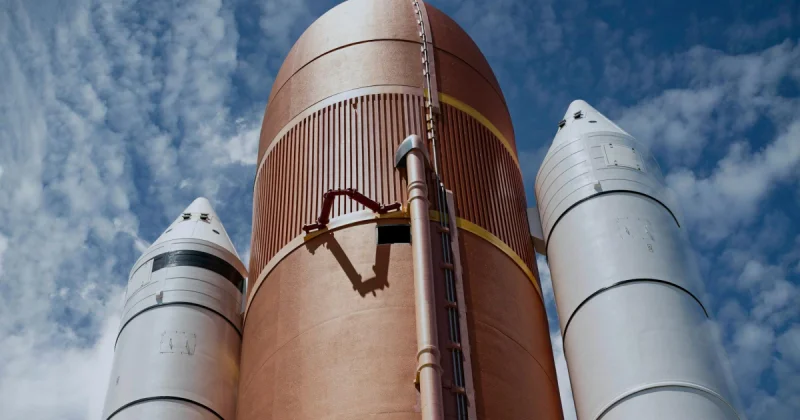
The pieces are not starting from zero. Orion’s crew and service module were mated earlier this summer, and four of the ten segments of the solid rocket boosters had already been stacked inside High Bay 3. Engine integration onto the core stage was also underway inside High Bay 2. Those are the kinds of milestones that make a launch schedule sound less like a promise and more like a countdown.
But the mission still depends on whether Blue Origin and SpaceX can keep moving fast enough. Isaacman said SpaceX may be able to launch again in early September after its last launch, and he said it could potentially launch every couple of weeks before the end of the year. That cadence matters because Starship Version 3 is supposed to launch after the first two missions and carry a docking adapter on the nose of its upper stage for Orion to meet it in orbit.
Blue Origin’s test lander also still has work ahead. Isaacman said the company has already started cutting hardware for the vehicle, but the demonstration lander does not include the BE-7 engine. It does include a life support system and crew habitation area, and Isaacman said what NASA learns from that mission could sharply reduce risk before Artemis 4. He also said Artemis 4 could potentially happen in 2028.
That is the real test behind the confidence: not whether the lunar program still has a target year, but whether three separate launch campaigns can stay lined up long enough to meet it. Isaacman’s view is that the sequence is far enough along to make 2027 look real, but still fragile enough that the next few launch windows and hardware milestones will decide whether Artemis 3 stays on schedule.