Iran moved quickly to knock down Donald Trump’s claim that he would soon declare the Strait of Hormuz a territory of the United States, with Kazem Gharibabadi saying on X early Saturday that the waterway cannot be seized by a tweet, an aircraft carrier, an order or an election speech. He said the strait would only be opened and closed under Iran’s command and that Iran would continue to enforce the blockade.
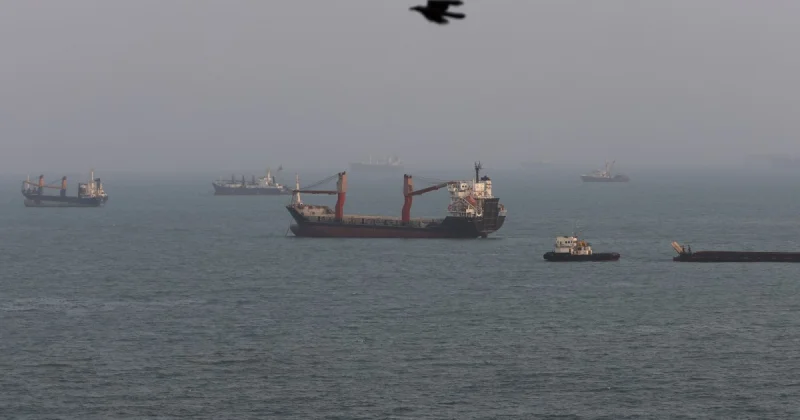
The reply landed at a moment when the dispute over the narrow passage has already turned into a live pressure point in the war between the United States and Iran. The Strait of Hormuz handled one-fifth of the world’s oil before the war launched on Feb. 28, but traffic has fallen to a trickle from the 130-140 vessels that typically move through it in peacetime. Only two vessels passed through on Friday, and no crude oil shipments were visible, according to analysis from Kpler.

Trump made the remark Friday at a police academy in Nassau County, New York, where he said he would soon declare the Hormuz Strait a territory of the United States. He also described Iran as “a very evil country” and said the United States had taken “a tiny little bit more” of the pressure off the conflict, while JD Vance said on Thursday that the No. 1 goal was to keep oil and gas cheap for Americans and that the second was to ensure Iran never gets a nuclear weapon.
That is the part that does not fit cleanly with the rhetoric. There is no public explanation here of what legal or practical basis Washington would have for declaring a sea lane a U.S. territory, and the statement arrives while few direct negotiations have taken place even though a 60-day negotiating period set in mid-June ends on Monday. In other words, the threat was made as the diplomacy meant to contain the conflict was running out of time.
The shipping risk is not theoretical. The United Kingdom Maritime Trade Operations Centre said a bulk carrier was struck in the hull by an unknown projectile in the Strait of Hormuz on Friday, though the crew was safe, no damage assessment had been reported and the environmental impact was still unknown. For now, the strait remains the place where the war, the blockade and the stalled talks all meet, and Monday’s deadline will show whether the fight is moving toward a deal or toward another round of escalation.