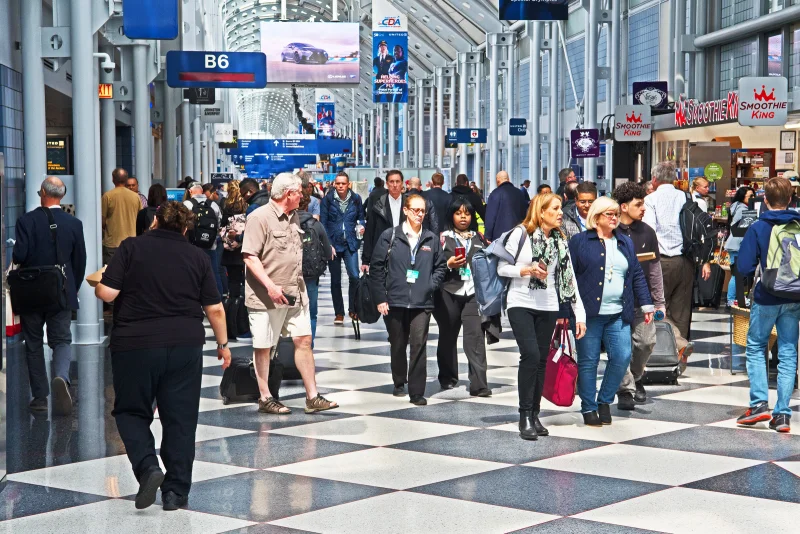
Chicago O'Hare International Airport halted all flights on Tuesday after the Federal Aviation Administration ordered a ground stop because severe weather swept across the area. The airport then remained under a ground delay until 10 p.m., turning a bad weather day into a shutdown that rippled across one of the busiest hubs in the country.
The scale was immediate. The FAA said delays were averaging 144 minutes at the Chicago airport, and ORD had more than 1,500 delays while affecting over half of the flights in and out of the airport. Chicago Midway Airport also faced a ground stop on all flights Tuesday, but the main pressure point was ORD, where disruptions had now stretched into a third day.
That mattered because ORD is a core airport for United Airlines and American Airlines, and the numbers showed how uneven the damage could be inside the same storm. United Airlines had 19 cancellations at ORD but also 518 delays for flights out of Chicago and 1,101 delays in total, a sign that the carrier was able to keep more flights from being scrubbed even as its schedule was slowed almost everywhere.

The cancellation picture looked different across the airport. SkyWest, Republic and Envoy Air had the most cancellations for ORD flights on Tuesday, followed by American Airlines. By Wednesday morning, ORD cancellations had fallen to nine, and SkyWest had four flight cancellations, but the day before had already left travelers dealing with flooding, tornado warnings and toppling trees across Illinois.
American Airlines updated its travel alerts page on August 11 with a rebooking offer for ORD flights, saying the same destination and cabin had to be booked to qualify. When it replied to a customer at ORD, the airline said it understood the frustration and could not predict whether a flight would operate, but would review the latest status and options by direct message. United Airlines had a similar offer in place for Chicago Thunderstorms, and by Wednesday it said a new flight had to be booked by August 14.
The broader pattern was larger than one airport. Ground stops had reached nine different U.S. airports a day earlier, and a disruption that began as a weather event at ORD was still pushing schedules around the country. For travelers at Chicago O'Hare International Airport, the key question is no longer whether Tuesday was messy; it is how much longer the weather will keep the airport pinned down.