


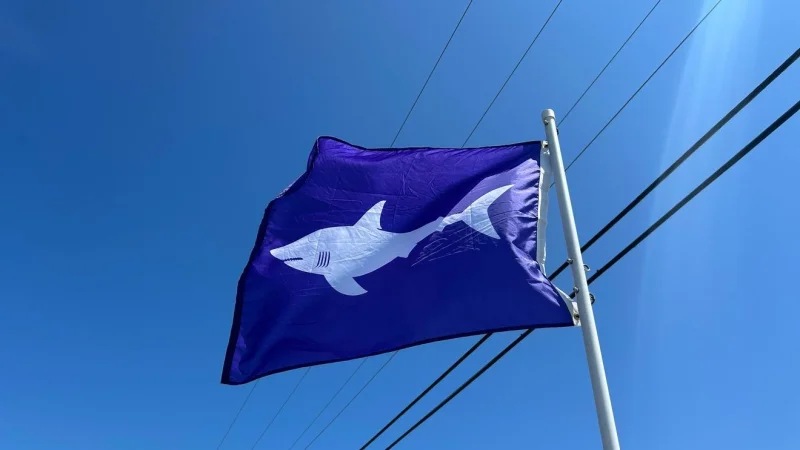
Scarborough Beach is keeping swimmers near the water even as white shark activity has surged around Maine, relying on two drones, a jet ski and ATV patrols to spot danger and push people back from the waves. Greg Wilfert said the beach has moved deeper into its drone protocol after nearby sightings and a Saturday encounter that left him pulled underwater during a swimming drill a few hundred yards off shore.
On Wednesday, the beach looked and sounded like a place on alert. Crowds were thin, a red flag marked hazardous conditions, two guards watched drone footage at the lifeguard tower, and jet skis cut back and forth while children splashed in the shallows. Wilfert said the system matters because there is no reliable way to tell when sharks are present without it, and he said the drones have spotted more than 30 white sharks in nearby waters in the last few days.

That is why the keyword is being searched now. Scarborough Beach has become one of the few places in the region trying to stay open by watching the water in real time, rather than closing the shoreline outright. John Chisholm said it is the first beach in New England to use regular drone patrols for sharks, while Gavin Naylor said people should not be in the water when sharks are nearby and that drones are what make that possible.
The setup is not just about the aircraft overhead. Lifeguards use a jet ski to chase sharks away and an ATV to alert swimmers along the half-mile length of beach, where the response has to move quickly from the lifeguard tower to the surf. Four professionally trained lifeguard dogs are also on site, though officials say they are temporarily restricted to the beach because of the sudden rise in shark attacks.
The friction is plain enough: Scarborough Beach is relying on surveillance to keep people close to the ocean even after Wilfert was pulled underwater, but the beach still cannot know with certainty when a shark is present unless the drones see it first. Wilfert said he has owned the two consumer model drones for around a decade, that they were originally bought to help in choppy wave conditions, and that they became central over the winter after a state shark-tracking buoy was removed. The beach is still open. What has changed is how hard it now has to work to justify that choice.
