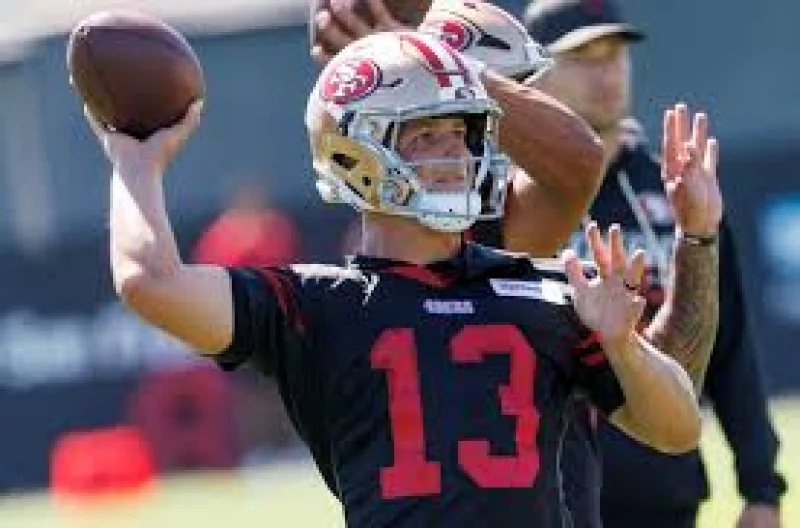
Dan Orlovsky put Brock Purdy in the top 10 in three quarterback trait categories, giving the 49ers QB ninth in ball placement, eighth in pocket presence and seventh in second-reaction ability. It is a clean summary line, but it is also the kind that invites a second look because the rankings were subjective and the placement was not uniform across every skill.
That is why Purdy is drawing attention today. He did not appear as a candidate in arm strength, mechanics, decision-making or rushing ability, yet he still landed inside Orlovsky’s top 10 three separate times. The middle ground matters here: Purdy was not treated as a one-tool passer, but he also was not graded as an all-around leader in every category. The result is a narrow but meaningful picture of how he is being viewed among NFL quarterbacks right now.
The strongest case for Purdy comes from the overlap between two different ways of judging accuracy. Sports Info Solutions had him 14th in on-target percentage in 2025, a number that sits a little below his ninth-place finish in ball placement. That is where the rankings start to feel less like a simple stat sheet and more like a judgment call. Ball placement can reward where a throw ends up, while on-target percentage measures a different slice of accuracy. The two can point in the same direction without landing on the same number.
Orlovsky’s own language helps explain the other two slots. When he talked about second-reaction ability, he framed it around what happens after the first picture breaks down. “The flip side is working outside the pocket,” he said. He added the sharper test: “Can the quarterback pull something out of thin air and still make a positive play?” That is a different skill from pocket presence, and it is also why Purdy’s eighth-place showing there should not be confused with his seventh-place result in second-reaction ability. One is about staying composed inside the structure. The other is about creating after the structure is gone.
That distinction matters because it shows where Orlovsky sees Purdy’s value and where he does not. Drake Maye was first in pocket presence. Josh Allen was first in decision-making and first in second-reaction ability. Matthew Stafford was first in ball placement. Purdy, by contrast, was clustered in the upper tier without reaching the top spot in any of the three categories where he appeared. The rankings leave him with a useful label, not a total one: efficient enough to stand out, not complete enough to dominate every test.
What remains unanswered is the exact line Orlovsky drew between a quarterback who is merely accurate and one who earns a high ball-placement grade, or between a passer who survives pressure and one who truly excels in pocket presence. Purdy’s numbers make the case that the distinction is real. They also leave room for disagreement, which is probably the point.