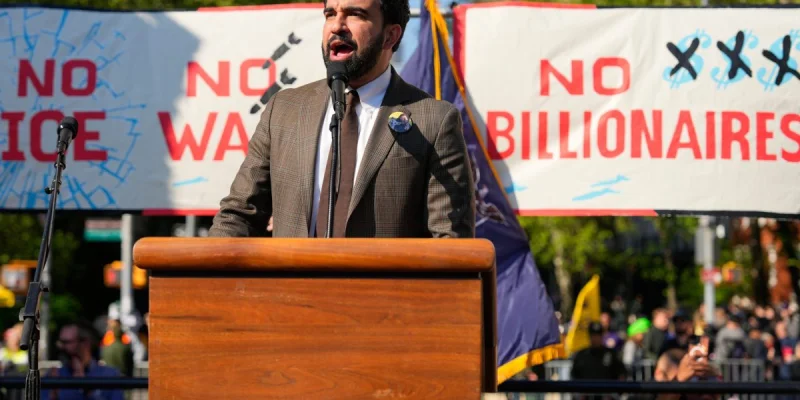
New York City's rollout of Zohran Mamdani's luxury home tax was temporarily halted this week after a group of homeowners sued, turning an early political win into a legal fight. The city moved quickly to appeal, keeping the tax effort alive while the case is sorted out in court.
The dispute matters now because the surcharge is meant to bring in $500 million a year from high-value second homes, and that money is tied to whether the tax can move forward without delay. Mamdani introduced the idea with a video that singled out hedge fund CEO Ken Griffin outside a Manhattan penthouse he bought for about $239 million, making the tax a high-profile test case from the start.
The levy would apply to one-, two- and three-family homes valued at more than $5 million, and to condos and co-ops valued at $1 million or more, if those properties are not the owner's primary residence. In practice, that means the tax is aimed at people who own luxury second homes in New York but live elsewhere for most of the year.

That is where the fight gets messy. City Hall says proving primary residency should not be difficult, but tax experts and homeowners say ownership records and documentation rules can make the question far more complicated, especially when properties are held through trusts or LLCs. Gary Bingel said the idea seems simple until the details start piling up, and Mark Limardo said the concept is straightforward but the ownership and documentation rules have made it very complicated.
The pushback has come from wealthy and moderately wealthy homeowners alike, and President Donald Trump has said he is looking into whether federal intervention could avert the tax. Trump said his primary residence is now in Florida and called on others to help avert what he described as a disaster before it is too late. Griffin, for his part, said it was frightening to be singled out by a public official.
The city can still press its case, but the pause shows how quickly a tax designed to hit a narrow slice of homeowners can become a broader legal test of who counts as a resident, what papers prove it and whether City Hall can turn a campaign promise into revenue. For now, the real question is not whether the tax exists on paper; it is whether the courts let the city collect it before the challenge is resolved.