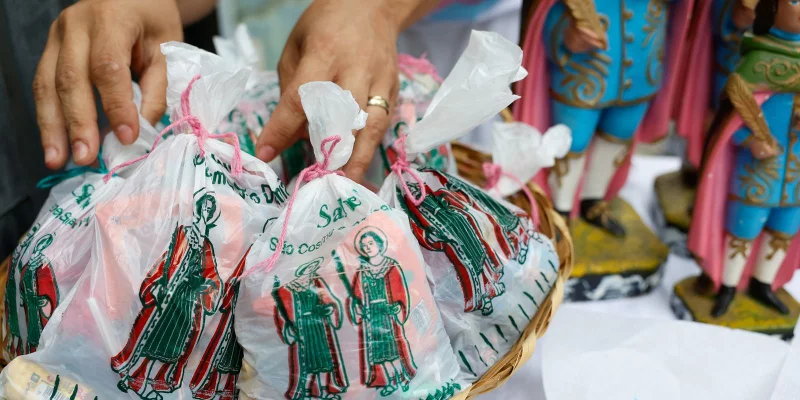
Rio de Janeiro communities marked São Cosme and São Damião on Sunday with mass, sweets and gifts, keeping a tradition that still moves between the Catholic Church and umbanda. In Andaraí, Caroline Pinho de Araújo, 40, said she returned to the saints in gratitude for her job, health and family, and later handed out sweets as part of the celebration.
She said she began to attach herself to São Cosme and São Damião as she grew up, first through the Catholic Church and later in umbanda. The annual date has become a familiar moment in Rio de Janeiro for children and adults who wait for the offerings, and for families like hers it is now tied as much to memory as to devotion.

The mass at the Paróquia de São Cosme e São Damião in Andaraí was only one side of the day. In Vila Isabel, the Terreiro de Umbanda Cosme e Damião handed out sweets, cake, hot dogs, cotton candy, toys and personal hygiene kits, a wider spread than the candy alone and a reminder that the custom has grown into a full community gathering.
Father Luiz Gustavo Menezes do Nascimento said he has taken part since childhood, when he used to collect sweets, and described São Cosme and São Damião as persecuted by the Roman emperor Diocletian. Ana Carolina Oliveira said her family has kept the tradition for more than 60 years, and that the terreiro has held the event for the sixth year, linking the day to a practice passed down across generations. She said Afro-Brazilian religions embraced Cosme and Damião because enslaved people had to use religious syncretism with the Catholic Church to continue professing their faith.
That shared celebration also carries a harder message. Caroline said the sweets are distributed in thanksgiving and to fight hate speech and intolerance. Vania Victorio Gonçalves da Silva said the custom comes from her grandmother and mother, while Mirele Marinho da Silva said celebrating openly is a way to show that religious intolerance does not silence her family. In a city where faith, memory and public rituals often collide, the sweets for São Cosme and São Damião remain both a gift and a statement: the tradition survives because people keep choosing to practice it in the open.