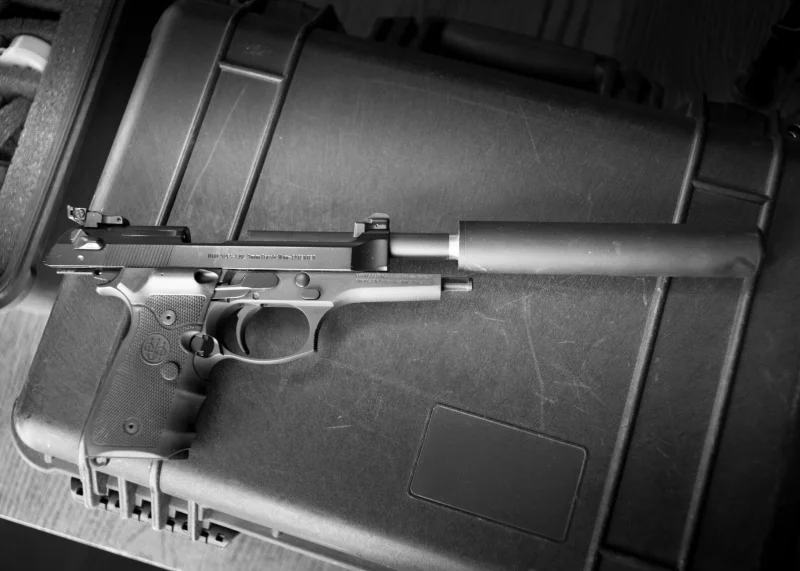
The Trump administration on July 23 moved oversight of silencer exports from the State Department to the Commerce Department, cutting the level of vetting required for export applications. The joint rules make it easier for manufacturers and retailers to send silencers, also called sound suppressors, to more customers abroad and simplify travel with them.
The change lands as the administration continues to push silencers into more ordinary commercial territory. It has already eliminated the federal tax required to own them and put forward proposals to streamline the buying process, a pattern that points in the same direction: less scrutiny, more access. For exporters, the new route matters because it removes a layer of review that had been built to slow down who could buy and move the devices.
Silencers were federally regulated in 1934 because of their use in violent incidents and the danger they pose. They can make it harder for bystanders and police to recognize that a gun has been fired and to pinpoint the direction of fire. That is why the export shift is drawing attention now: the government is easing a device that was long treated as a special concern because of how it can mask gunfire from people nearby.

The move also fits into a broader record of loosening firearms export controls under the Trump administration. In January 2020, the first Trump administration shifted oversight of most firearm exports from the State Department to the Commerce Department, and the article says that change led to a surge in gun violence abroad. Later examples were stark: a legally exported Sig Sauer P365 was used in October 2022 in a mass shooting at a preschool in Thailand that left 36 people dead, including 23 children, while in August 2023 an American-made firearm was diverted from Peru to Ecuador and used to assassinate a presidential candidate.
There is also a direct contradiction at the heart of the policy. The same export system is being loosened for silencers even though the government has already seen how easier firearm flows can end up elsewhere: the Commerce Department identified exports to Kazakhstan and Kyrgyzstan that were diverted to Russia and may have been used in Russia's invasion of Ukraine. A February 2025 Government Accountability Office report found that U.S. export licenses were aiding the flow of weapons to foreign criminal organizations, corrupt police and military forces, and authoritarian governments. In April 2024, the Biden administration tightened firearms export requirements and improved oversight over where U.S. guns end up, only for the second Trump administration to roll back that rule in October 2025 and also end a congressional notification requirement for export applications for semi-automatic firearms worth over $4 million.
The unanswered question is not whether the process is easier. It is how much easier, and how far the new Commerce Department path will go in practice. The administration has already ended the ban on silencer exports to private foreign buyers, a prohibition first enacted in 2002 to keep the devices from falling into the wrong hands and being used against American soldiers fighting in Iraq and Afghanistan. July 23 extends that course. For exporters, owners and foreign buyers, the direction is clear even if the final shape of the market is not.