


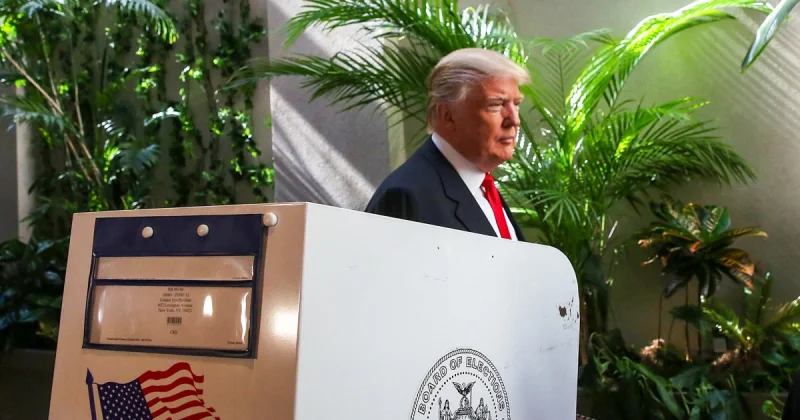
House Republicans took a new run at the SAVE America Act on Wednesday, releasing a budget blueprint that would steer $10 billion to the House Administration Committee so it can try to carry out parts of the voting bill through reconciliation. The move is designed to let the House bypass the Senate filibuster and keep the measure alive even though it lacks enough support to advance the usual way.
That is why the bill is back at the center of Washington searches now. President Donald Trump has been pressing Republicans to pass it and says the measure is needed to secure elections. The SAVE America Act would require voter ID at the polls and proof of citizenship to register to vote, a harder sell than it may first sound because federal law already bars noncitizens from voting in federal elections and requires people registering to swear under penalty of perjury that they are citizens and eligible.

The House passed the Safeguard American Voter Eligibility Act last year, but it never gained traction in the Senate. On Feb. 11, House Republicans approved an expanded version, the SAVE America Act, by a 218-213 vote. Now they are trying to fold components of it into a $95 billion party-line spending bill, a route Speaker Mike Johnson says is the only way to make the measure law. After meeting Wednesday night with Vice President JD Vance and House Republicans, Johnson said, “We’re going to pass the Save America Act into law, as much of that as possible.”
But the path is narrower than the pitch. Reconciliation can only carry provisions tied to taxes and spending, and the Senate parliamentarian will decide which pieces clear that test. That means the full election bill will not move intact. On Thursday, John Thune said Republicans had “looked at that at length” and said there are things that could make it through, but asked whether they would be enough to satisfy people who want the full SAVE Act. He added that grants to states could potentially survive the process. The unresolved question is not whether Republicans want to move the bill; it is which parts of it can survive the rules well enough to become law.
Even if the budget blueprint clears both the House and the Senate, work on the final package can start only after that. What comes next will be decided in the fine print, where the parliamentarian draws the line between what Republicans want to pass and what reconciliation will actually allow.
