


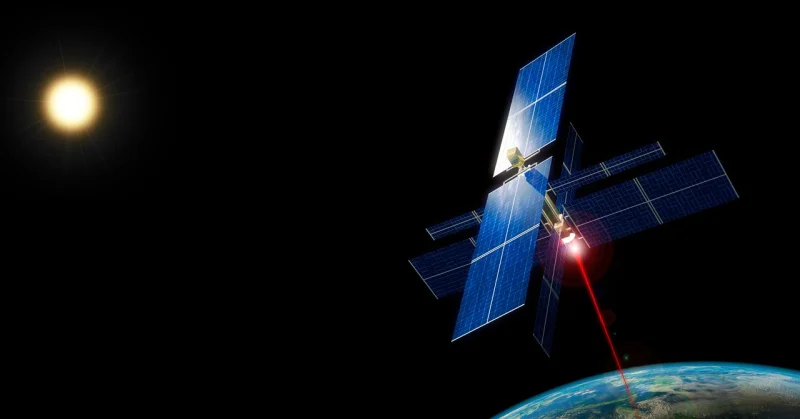
The US Federal Communications Commission approved Reflect Orbital on July 9 to build, launch and operate Eärendil-1, a mirror satellite meant to send sunlight to specific places on Earth at night. The test craft will fly in low Earth orbit with an 18-meter reflector.
The approval matters because it turns a controversial idea into a live regulatory green light. Reflect Orbital, based in Santa Monica, California, says the system could be used for search-and-rescue, emergency support for critical infrastructure, longer hours at solar energy facilities and temporary lighting for remote construction sites without conventional generators. The company also says the first satellite could illuminate an area 5 to 6 kilometers across for brief periods from an altitude of about 625 kilometers.

That is the core of why the decision is drawing attention now. The FCC received nearly 2,000 public comments during its review, and the leading criticism came from the American Astronomical Society, DarkSky International and the Royal Astronomical Society. Their concern is not abstract. Even one bright reflector in orbit can add glare to a sky already crowded with low Earth orbit satellites, and the question is whether a system built to deliver light on demand can do so without turning into another source of interference.
Tony Tyson, a longtime critic, put it bluntly: “Imagine the sky filled with moons.” He said he remains skeptical that the satellites can aim reflected light with the precision the startup claims. Betty Kioko went further, saying, “For optical astronomy, this is an existential threat, and we hope that the regulators will share that view.” Those objections cut to the same point: a technology promoted as useful on the ground can still be disruptive overhead, especially when the beam is meant to land where darkness normally belongs.
Reflect Orbital says it envisions a much larger system, with 50,000 satellites by 2035, which is why the July 9 approval is more than a one-off test permit. It gives the company a path to prove whether the reflector can be aimed tightly enough to make the concept practical, or whether the broader fears about brightness, sky pollution and lost observing time will define the project instead. For now, Eärendil-1 can move ahead, but the harder test is still the one the company has not yet answered in public: how much light can it really deliver at ground level without changing the night sky for everyone else watching it.
