


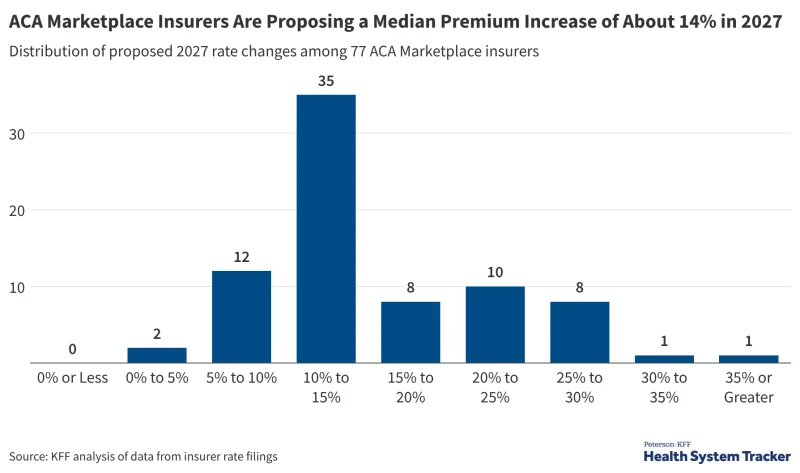
ACA Marketplace insurers are seeking a median proposed premium increase of 14% for 2027, a fresh round of filings that points to another expensive year for people buying coverage on their own. The analysis covers 77 insurers in 16 states and the District of Columbia with publicly available requests.
Cynthia Cox, one of the named authors of the review, said the filings are the first detailed look at next year’s pricing and show how quickly the pressure is building. If the early indications hold, typical premiums in the ACA Marketplaces will have jumped by more than one-third over two years, after last year’s median nationwide proposed rate change of 18% and a median finalized rate change of 20%.
The timing matters because insurers submit these requests every spring and summer, and state regulators are now starting to sort through the numbers before final 2027 premiums are set. The individual market is a small slice of U.S. coverage, but it is the part most people see when they shop through Healthcare.gov or state-run platforms such as Covered California, and its pricing often sets the tone for what consumers face when open enrollment arrives.

Underlying healthcare prices stood out as a key driver of the 2027 filings. Insurers pointed to rising health services costs, general economic inflation and labor shortages as reasons premiums are climbing, and they also cited the scheduled expiration of enhanced premium tax credits at the end of 2025.
That second factor is already reshaping the market. The loss of the credits led to lower enrollment in 2026, with healthier enrollees more likely to drop coverage, and insurers expect the market to continue to deteriorate in 2027 as that help disappears from the pricing picture. The result is a frustrating pattern for shoppers: the requested increase for 2027 is lower than last year’s median proposed increase, but it still marks a second straight year of double-digit hikes.
There are still gaps. Hawaii, Illinois and Texas had publicly available filings for only part of their participating insurers, and the filings do not spell out exactly how much of the increase comes from healthcare costs versus the end of the enhanced tax credits. What they do show is that the next round of final rates will be set against a market already under strain, with the biggest question for consumers not whether premiums rise, but by how much their own plan will change once regulators finish their review.
