The Chicago White Sox are down to three names at the top of the 2026 MLB Draft, with Roch Cholowsky, Vahn Lackey and Grady Emerson now carrying the strongest connection to the No. 1 overall pick. The decision is close enough that it could define whether the White Sox use the pick on the safest bat, the fastest riser or the player who could leave room to spread the money elsewhere.
That search is happening now because draft weekend has arrived and the White Sox have the first selection in hand. Chris Getz said in December 2025 that getting No. 1 overall gave the club a chance to land someone “big-time impactful,” and he made clear there are still paths to consider rather than a choice already locked in.
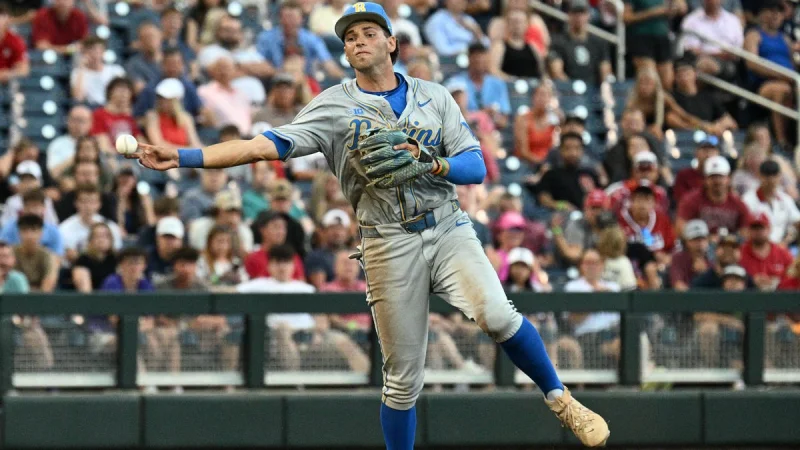
Cholowsky was for much of the year the player most people assumed would go first. The UCLA shortstop backed that up with a.320/.452/.636 line and 21 home runs as a senior with the Bruins. But the college season also brought questions about how high his ceiling really goes, and that matters when a front office is deciding whether the best player is also the best fit at the top of the board.
Lackey, meanwhile, has gone from a steady name to a real problem for everyone else at the top. The Georgia Tech catcher jumped from a.921 OPS in 2025 to 1.291 in 2026, and his home run total climbed from six to 20. For a player whose value is built on moving fast, that kind of leap changes the conversation. Catchers who hit like that are harder to ignore, even if the position adds wear and forces clubs to think harder about how long the bat can stay ahead of the rest of the profile.
Emerson sits on the other end of the spectrum. The Texas high school shortstop is viewed as a possible under-slot option at 1-1, which in plain terms means the White Sox could sign him for less than the pick’s full bonus value and use the savings on other selections later in the draft. That is the kind of maneuver that can matter when a club’s farm system is still only middling and the front office wants more than one impact piece out of the weekend.
The White Sox also have to weigh how the organization looks beyond this one pick. Billy Carlson is still years away from debuting, Caleb Bonemer looks more like a third baseman than a shortstop, and Colson Montgomery has already made major gains in addressing the White Sox shortstop problem. That leaves Chicago with a chance to choose between a bat that could help sooner, a catcher whose rise is hard to miss and a prep shortstop who could give the draft budget more flexibility.
There is still friction in the middle of all that certainty. Cholowsky may still be the cleanest answer on talent, but the fact that he was no longer treated as an untouchable consensus choice shows how much the class has moved. Lackey’s surge and Emerson’s bonus leverage give the White Sox alternative routes, and that is exactly the kind of decision a club makes when the first pick is as much about board management as it is about one player’s ceiling.
For the White Sox, the next step is simple and consequential: make the pick and set the tone for how they want this draft to work. If they go for the most polished college bat, they probably land on Cholowsky or Lackey. If they want to stretch the class and build more depth around the top pick, Emerson becomes harder to dismiss. Either way, the first selection will say as much about the organization’s plan as it does about the player it chooses.