


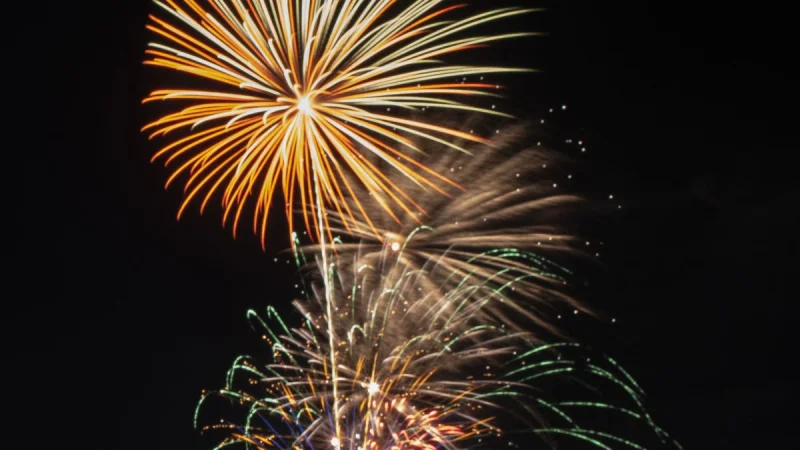
Most of the fireworks expected to boom across Arizona on this coming Fourth of July are illegal, including anything that detonates, explodes or flies into the air. The state still allows commercial fireworks shows put on by experts, but for everyone else the rule is simple: if you can hear it, officials say it probably was not a legal firework.
That matters now because Arizona residents are heading into the holiday looking for what they can buy and use without breaking city and state law. Arizonans should purchase only the fireworks available at local stores and follow the rules in their city, because some cities can fine violations by as much as $2,500.
The restrictions are tied to a danger that never really leaves Arizona in July. Hot summer weather turns desert plants into kindling, and wildfire risk is the reason the state keeps most fireworks off the table. Legal fireworks here are a relatively new phenomenon, not a longtime tradition, and they exist only because a 2010 law pushed by Andy Biggs carved out room for some consumer use.
Biggs said he first pushed for legal fireworks in 2009, after being elected to the House of Representatives in 2002. He said that when he was a “little kid,” Arizona had legal fireworks, and he wanted people to “feel like celebrating in a way our forebearers did.” He also said the legal versions provide “a sense of exuberance and life that exceeds the normal, drab, day-to-day,” language that helped frame the fight as one about celebration as much as regulation.

The line he ran into was fire safety. Kristi Gagnon said the Arizona Fire Marshals Association was opposed to the legislation, saying, “We were opposed to that legislation,” and adding that its focus was “strictly on the fire risk and the life-safety risk, and fireworks poses a risk to both of those areas.” Jan Brewer vetoed Biggs’s 2009 bill because it did not sufficiently address the risk of fire in Arizona, even though the measure had passed the House and Senate.
Biggs came back in 2010 with a revised bill that let city officials enforce their own fireworks rules and sent money from fireworks fines into the state’s wildfire suppression fund. The compromise made some consumer fireworks legal, but it did not change the basic rule that most fireworks people think of on July 4 remain forbidden. The state Legislature had made all fireworks illegal in 1941, with violators subject to a $100 fine, and a June article in The Arizona Republic said the bill was meant to help children grow to adulthood with full benefit of fingers, hands, eyes and life itself.
Enforcement is where the law gets messy. Police officers must have visual evidence of a suspect misusing fireworks to make an arrest, which means the people who hear the crackle and see the smoke often still have to wait for proof that can be hard to collect. That is why the holiday rules matter beyond the fine print: in Phoenix and across Arizona, July 4 fireworks are legal only in narrow cases, and the rest are treated as a fire risk first and a celebration second.
For anyone planning to celebrate, the safest answer is the narrow one. Buy only what local stores are allowed to sell, use it only where city and state law permit, and leave the big aerial bursts to the professional shows.
