


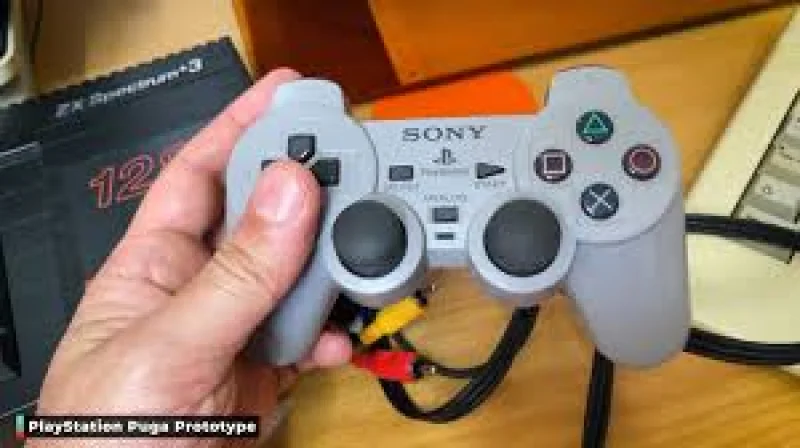
Sony built a PlayStation PUGA prototype that turned a standard DualShock into a self-contained PlayStation 1, but the device never reached store shelves. The controller held the hardware inside its casing, needed no separate console, and was meant to be a portable way to play original games on a television.
That is why Brian “Biscuit” Watson is still talking about it now. He said the prototype could hold roughly 10 games on a 4 GB SD card, a reminder that the hardware problem was already close to solved. The PlayStation PUGA was not a fantasy sketch. It was a working idea that Sony pulled before launch.
The timing matters because the device surfaced again through Watson’s remarks on the Retro Collective YouTube channel, reviving one of Sony’s cleaner near-misses. The PlayStation PUGA was conceived as an affordable product, with a battery-powered version reportedly being tailored specifically for the Brazilian market. Players would plug the controller into a television, load games from an SD card slot and start playing without any standalone box under the screen.
The collapse came from the business side, not the engineering side. Sony’s licensing division could not reconcile royalty terms with the publishers whose games would have run on the system, and outside publishers reportedly wanted high royalty rates. In that kind of setup, every copy of a low-cost device could become a hard negotiation over pennies, including a 10¢ per unit issue that made the economics even tighter. The hardware may have worked reliably, but Sony still chose to pull the plug after a complicated development cycle.
That leaves the PlayStation PUGA as a rare what-if from Sony’s hardware history: a plug-and-play DualShock variant that was built far enough to prove the concept, then stopped at the point where software rights began to matter more than silicon. Watson’s account makes the unanswered part sharper, not smaller. The machine existed. The real question is how many other near-shipped ideas died at the same licensing table.
