


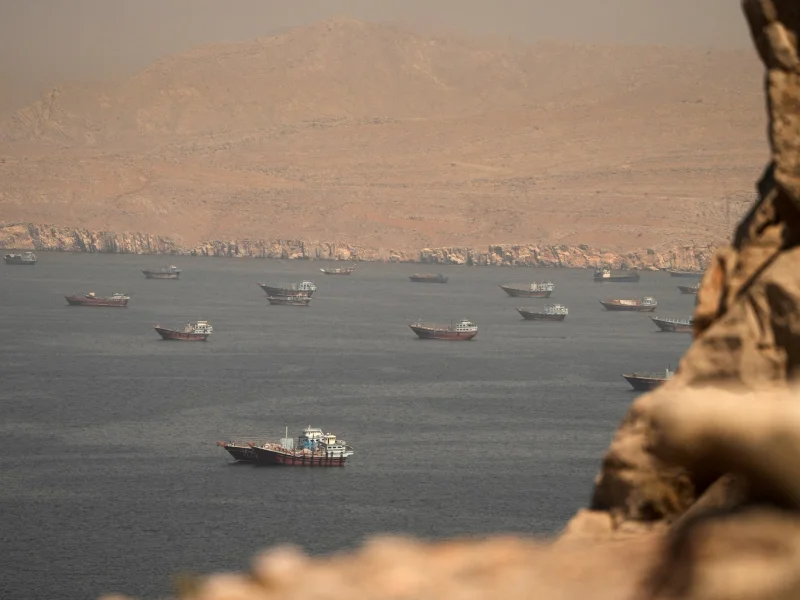
Oil transit through the Strait of Hormuz resumed faster than expected on Thursday, with 35 oil and gas tankers exiting the passage as traders reacted to a reopening that was moving ahead of schedule. Brent and US West Texas Intermediate both fell more than 1 percent, extending a slide that had already taken hold for a third straight day.
The shift matters because the Strait of Hormuz handled one-fifth of global oil supply before war-related strikes disrupted the route, and the recovery is feeding directly into price expectations. Morgan Stanley cut its oil forecasts for the second time in two weeks and warned of a risk of a glut in the global crude oil market, a warning that helped push benchmark prices down to $70.78 a barrel for Brent and $67.74 a barrel for US West Texas Intermediate by 06:42 GMT.
Mohammad Reza Farzanegan said he would be cautious about treating the surplus forecast as settled, arguing that the market is already pricing a return of Hormuz flows and a temporary opening for Iranian oil exports. He added that both assumptions remain fragile, a reminder that the market is responding to a reopening that could still be reversed if diplomacy fails.

The route is reopening under an interim arrangement that came out of the June 17 MoU between the US and Iran, which triggered a 60-day negotiation period aimed at reaching a permanent peace deal. Under that deal, Iran agreed to let ships transit the passageway for 60 days without charge, but the wording has been contentious because Tehran says it still keeps control of the strait in joint accord with Oman.
That makes the latest easing real but unfinished. Qatar said Iran and the US had made progress in talks over the waterway, yet the truce remains exposed after the US launched strikes on Iran last week, citing an attack against a commercial vessel as a motivation. The reopening has also come against a wider demand shift, with China cutting imports and relying on commercial stockpiles after prices soared, then turning more heavily to Russia, Kazakhstan, Brazil, Indonesia and Venezuela.
How many ships were stranded at the height of the disruption was never fixed in the public reporting, but the pace of exits on Thursday shows how quickly the corridor can clear when the market believes the risk has eased. What comes next is the real test: whether the 60-day period delivers a durable deal, or whether the tankers that have started moving again are only crossing in a temporary lull.
