


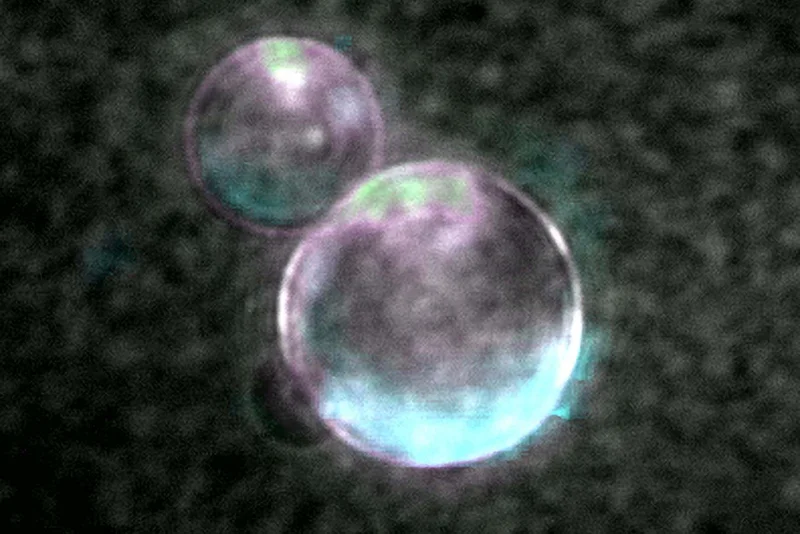
Scientists at the University of Minnesota have built SpudCell, a synthetic cell system made from non-living components that can complete a full cell cycle. The prototype uses 36 existing bacterial genes and can copy DNA and reproduce in a primitive way, but it gives out after about five divisions.
The work matters because it is being described as the first synthetic cell system of its kind to make it through a full cycle. Kate Adamala, who led the project, said she would call it living only if it could keep replicating indefinitely and evolve through Darwinian evolution. That is the line the system still cannot cross.
SpudCell was assembled by Adamala and her colleagues from the ground up rather than by stripping genes out of an already minimal bacterium. Earlier efforts at creating simpler life forms worked by deleting genes from bacterial cells that already had small genomes. This team did the reverse: it started with just 36 genes, some from E. coli, some from phage viruses that infect bacteria, and one from jellyfish that makes a fluorescent protein so the cells can be seen.

The engineering is striking, but it is also incomplete. The 36 genes were built into seven circular pieces of DNA, and some bubbles ended up carrying all seven parts of the genome. Two of the genes code for proteins that form pores in the membrane, while other large molecules have to be delivered in small bubbles that fuse with the cells. In other words, the system can move through a crude version of life’s cycle, but it still depends on outside help for the building blocks it cannot make on its own.
That dependence is the point where the claim runs into reality. The researchers call it a synthetic cell, and the label fits as far as the mechanics go, but it is not yet a fully living cell in the way biology usually means it. It stops after five or so divisions, which means the central problem is not just making a cell copy itself once, but making sure it can keep doing so without external support or collapse.
The team plans to make the project open source and keep developing it. The next step is not a headline-grabbing flourish but a hard engineering problem: make the seven-piece system stable enough to divide beyond a few rounds, and then enough to keep going. Until then, SpudCell remains a milestone with a ceiling.
