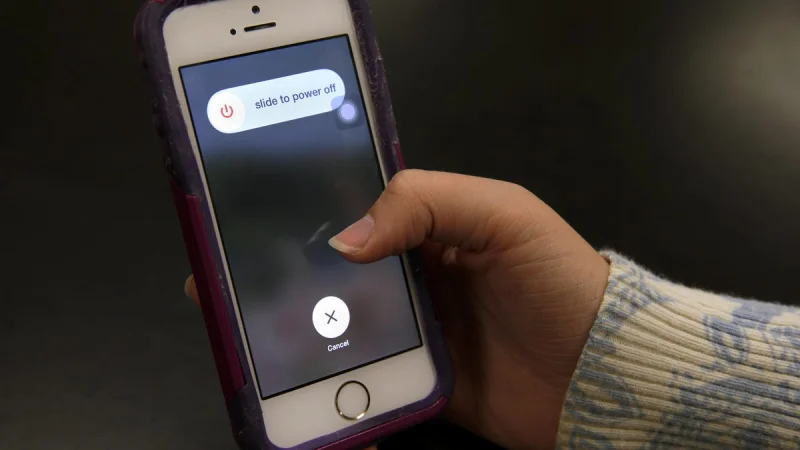
Wisconsin’s ban on cellphones during instructional time in school took effect July 1, putting a statewide rule on top of restrictions many Fox Cities students were already living with. In Appleton, Hortonville, Kaukauna, Kimberly, Little Chute, Menasha and Neenah, personal device policies were already in place before the new law began.
Rebecca Loroff, an education reporter for the NETWORK-Wisconsin, has been covering how those rules work district by district. The reason the mobile phone issue is drawing attention now is simple: the state drew a line on July 1, but the Fox Cities had already been drawing their own lines for months or years, and not always in the same place. Some districts stop use during instructional time. Others go further and bar devices from the whole school day for younger students.
The new state law is narrower than some local policies. It allows school-issued devices, emergency situations or perceived threats, devices used under an individualized education plan or 504 plan, and teacher-authorized use. It also reaches beyond phones to cover other personal electronic devices, including smartwatches, gaming devices and e-readers. That broader definition matters because the local rules already treat those devices the same way they treat a cell phone.
Appleton has a bell-to-bell ban on all personal communication devices for kindergarten through eighth-grade students. High school students there cannot use devices during instructional time. When a device is off-limits, it must be turned off and stored out of sight. Hortonville uses a similar split: K-8 students must keep their personal communication devices in lockers or backpacks during the school day and may not have them on their person, while high school students face an instructional-time ban and must keep devices powered off and out of sight during class.

Kaukauna draws its lines by grade level and by part of the day. Students in grades five through 12 face an instructional-time ban, but fifth- through eighth-grade students also cannot use their devices during lunch. K-5 students cannot use personal devices during the school day at all, and when use is banned, the devices must be powered completely off and stored in backpacks, lockers or other designated classroom areas.
Kimberly takes another approach. High school students may have cellphones, but they cannot use them or other personal devices during instructional time, and the devices must be powered completely off and stored out of sight during class. K-8 students there follow guidelines set by individual school buildings, which is one reason families moving between schools can run into different expectations even within the same district.
Little Chute and Menasha have a bell-to-bell ban for K-8 students, while high school students there are barred from using devices during instructional time. In those districts, devices that are not allowed for use must be completely powered off and stored out of sight. Neenah also separates the rules by age group: high school students may not use personal electronic devices during instructional time and must keep them out of sight in class, while K-8 students must completely power off devices and store them in assigned hall lockers or other authorized areas during school hours.
The overlap between the state law and local policies leaves the practical work to the schools already enforcing them. For families in Appleton and the Fox Cities, the change is less about a new ban appearing in the classroom than about a statewide rule catching up to a patchwork that was already there. What remains to be seen is not whether districts will have to act, but how little their day-to-day enforcement will actually change.