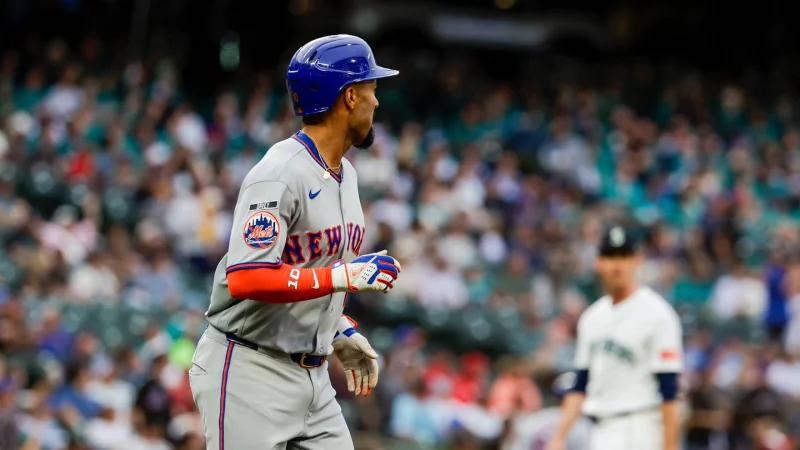
Bobby Bonilla is still collecting from the New York Mets, and the bill is not done. Since 2011, the Mets have paid him $19.1 million under the deferred agreement, and they still owe $10.7 million in yearly $1.19 million installments that run through 2035.
That is why Bonilla’s name comes back every July 1. He has not played for the Mets since 1999, but the payments keep arriving on schedule, turning a long-ago contract into one of baseball’s most durable oddities and a recurring punchline tied to #LOLMets.
The size of the obligation matters because it stretches far beyond the years Bonilla spent in New York. The Mets will keep sending him $1.19 million a year for another decade, a stream of payments that began long after his last game for the club and will continue well into the future. The structure is simple now, even if the original deal was not: money owed in the present was pushed into the future, and the future is still here.
What gets lost in the joke is that Bonilla was a very good ballplayer. He began as an undrafted player after finishing high school in the Bronx, spent a semester at the New York Institute of Technology, then got his chance after Pirates scout Syd Thrift saw him at a baseball camp in Europe. He was acquired by the White Sox in the Rule 5 draft after breaking one of his legs during spring training in 1985, then had a decent start to his rookie year in 1986 before going back to the Pirates organization at midseason.
By the time the Mets offered him a five-year, $29 million deal in the winter of 1991-92, Bonilla had already built the kind of production that made him look like a smart investment. From 1988 to 1991, he ranked as the 17th-most-valuable position player in baseball by FanGraphs’ wins above replacement metric, while also posting the 11th-best slugging percentage in MLB, the 13th-best weighted runs created plus and the eighth-most batting runs above average. He was, for a while, worth what he was paid.
The friction is that the contract remembered as a cautionary tale followed a player who had earned his place. The Mets’ front office knew it would draw criticism even then; Al Harazin said, “I’m sure I’m going to get flak for the deal,” after Bonilla signed. What became famous was not that the Mets paid for talent, but that they turned the final payday into a long-running obligation that still has years left on it.
The next check is already mapped out. The Mets will keep paying Bonilla every year until 2035, and each July 1 will reopen the same old story: a player once paid like a star, a contract that outlived the team that made it, and a reminder that the joke attached to his name never tells the full story.