


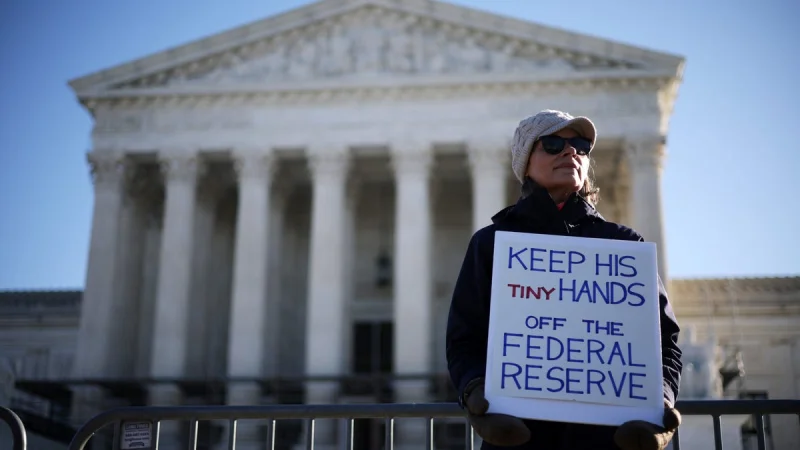
The Supreme Court on June 29 blocked President Donald Trump from firing Lisa Cook from the Federal Reserve, letting her stay on the central bank’s board of governors while she challenges his move in court. The 5-4 ruling is a direct limit on Trump’s ability to reshape the Fed by dismissal, even as the dispute over Cook’s removal continues.
The timing matters because the Federal Reserve’s decisions on interest rates affect mortgages, auto loans and credit card debt, and Trump has been sharply critical of the Fed’s cautious pace on lowering borrowing costs. Cook has been part of that cautious approach, which puts her at the center of a fight over who controls the central bank at a moment when the White House wants more room to act.
Chief Justice John Roberts wrote that Congress limited the president’s power to remove Federal Reserve governors for good reason, and warned that letting a president dismiss them for any reason, without notice or later judicial review, would turn for-cause protection into little more than at-will employment. Four of the court’s six conservative justices disagreed, underscoring how narrow the majority was even as it preserved Cook’s seat for now.

The ruling also left a sharper question unresolved: whether Trump has sufficient cause to remove Cook at all. That issue now stays with the lower courts, which will keep weighing the legal standard for dismissal while the broader case moves forward. Trump said on social media that the justices had sent the matter back on a strictly procedural basis and vowed immediate action to ensure that someone he described as having committed wrongdoing would not be making vital decisions concerning the Welfare of the United States of America.
The contradiction is hard to miss. On the same day, the court made it easier for Trump to fire leaders of other independent agencies in a separate case, while drawing a firmer line around the Federal Reserve. The court’s message was not that presidents have no power to remove agency leaders, but that the Fed sits in a narrower category because Congress insulated it decades ago from day-to-day political pressure.
That leaves Cook in place while the legal fight continues, and it leaves Trump with only part of what he wanted. For now, the central question is not whether the president can force her out immediately; the court said he cannot. The remaining test is whether the facts behind the firing effort give Trump enough cause to win later, and that is the issue the lower courts will have to decide.
