


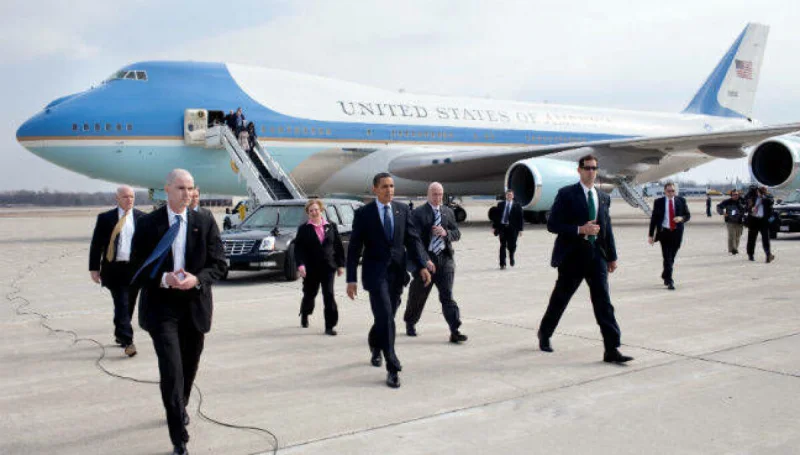
A Department of Homeland Security inspector general report says Secret Service mobile device security was so weak that agents routinely relied on personal phones during protective operations, even though those devices were not supposed to be used for official business. The review, ordered after the 2024 assassination attempt against President Trump in Butler, Pennsylvania, found government-issued devices were not secure enough to support the mission.
The report lands now because it puts a recent, concrete failure on paper: mobile-device practices that touched protective work in the US and overseas, and did so across a long review window that ran through May 2025. The inspectors reviewed call and text logs from October 2022 through May 2025 and found more than 15,000 instances, out of 4.8 million calls, in which employees sent and received calls from colleagues' personal phones while working protective events.
That scale matters because the review did not describe a rare exception. Investigators also examined travel vouchers for employees who travelled internationally between October 2022 and April 2025 and found 30 employees claiming reimbursement for using personal phones for official government business. Most of the 24 interviewed employees said they needed to use their personal cell phones during nearly every foreign assignment, a sign that the problem was built into daily operations rather than limited to one event or one office.
The inspector general said the government-furnished devices did not have sufficient security to ensure real-time, continuous protection from cyberattacks by foreign adversaries or individuals, and it found vulnerable apps on those devices. The report said employees used personal mobile devices as hotspots for government laptops and used them to reach websites blocked on government phones, workarounds that may have solved an immediate problem but widened the risk. Homeland Security policy only allows Secret Service employees to use government-furnished equipment devices for official business, yet the review shows personal phones filled the gap because the official gear could not keep up.
That gap is where the risk turns from technical to operational. The report warned that a personal device that is jailbroken, infected with malicious code, or not up to date on security software could let an adversary intercept device communication. It also said outdated and vulnerable apps could allow malicious actors to conduct surveillance, track locations, or record employees' communications, while unsecured networks may let cybercriminals access data or install malware. Those are not abstract threats when the phones in question are being used around protective missions tied to Trump's security.
What the report does not answer is whether the Secret Service or Homeland Security has fixed the weaknesses since the review period ended in May 2025. It establishes that the agency was operating with devices that lacked the needed capabilities and that employees were improvising with personal phones, but it does not confirm any upgrade, policy change or deadline for one. That leaves the central question less about whether the problem existed than whether it has finally been closed.
