


Google is starting to roll out new Google Play fee rules on June 30, opening lower commissions and outside payment options for developers in Europe, the UK and the US. The change comes out of its settlement with Epic Games and marks the first step in a wider shift to how app transactions are charged on the Play Store platform.
For developers watching the calendar, June 30 is the day the new structure becomes real, not just promised. Google says the changes will begin in Europe, the UK and the US first, then spread to Australia on September 30, to Japan and Korea on December 31, and to all other regions on September 30, 2027. That staggered rollout is why the search interest is spiking now: the rules are no longer theoretical, and the first markets are about to live under them.
The fee structure itself is split into two parts. Google is lowering the service fee to 10 percent on the first $1 million in yearly earnings. Above that threshold, the total rate for some transactions can reach 25 percent on existing installs, while apps installed after June 30 will top out at 20 percent. On transactions that go through Google Play, developers will also pay a 5 percent billing fee, which Google says applies in the initial markets.

The practical difference is that a developer can send a user outside the Play Store to finish a purchase and avoid that billing fee, but the standard service fee still applies. If the purchase stays inside Google Play, the billing fee is added on top of the service fee. That means the savings depend on the type of transaction and when the app was installed. For some smaller developers, the first $1 million a year gets the clearest break. For larger ones, the math gets tighter once revenue moves above that line.
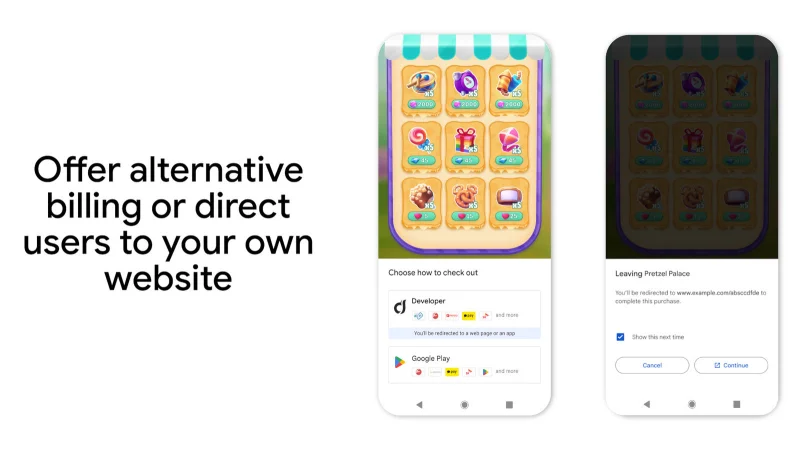
Google says developers can build a choice screen in line with its UX guidelines to direct users to external payment options. That matters because the company is not just changing the price of access; it is also setting the rules for how the handoff to another payment path should look. The missing piece is how strict that screen will feel in practice, and how much room developers will really have to steer users without breaking Google’s rules.
Even so, the deal stops short of one remedy that had loomed over the case. The settlement does not force Google to distribute third-party app stores in Google Play, even though the judge had been set to consider that option in 2024. That leaves Google with a narrower concession: lower fees and more payment flexibility, but not a reset of store control itself.
Google has spent years fighting Epic Games over billing and control on the Play Store, after Epic pushed cheaper external billing on Fortnite in 2020 and the game was removed from both stores. Google says the dispute will end globally, and it is also building programs that offer developers a fee break. The Games Level Up program will soon include a lower transaction fee, while the new Apps Experience program will offer a similar deal for non-game content. Both programs will be available to developers in Europe, the UK, Australia and the US on September 30. That makes June 30 the start of the rollback, but not the end of the fight over how much control Google keeps over Google Play.
