


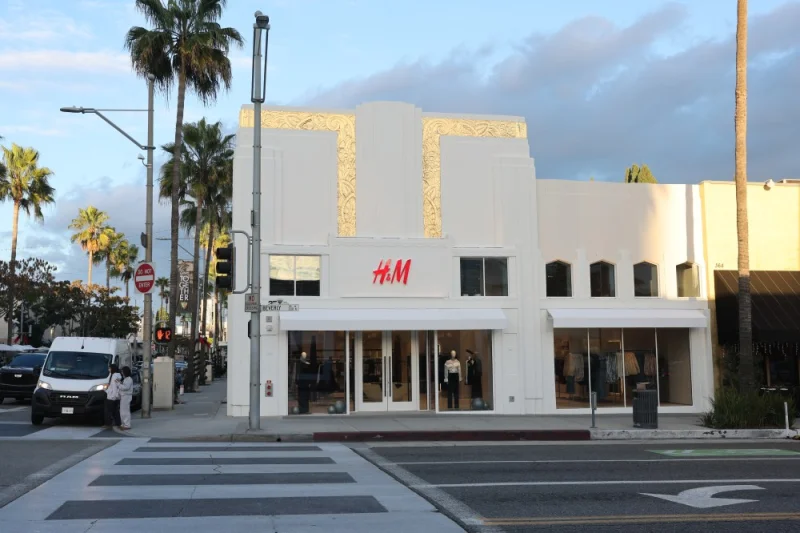
H&M reported second-quarter revenue of 54.82 billion kronor, or 4.95 billion euros, as the retailer pushed ahead with a turnaround that is still not fully showing up in sales. Reported sales fell 3.3 percent from a year earlier in the three months to May 31, even as operating profit improved after restructuring costs were stripped out.
The numbers matter now because the company is trying to prove that a leaner store base and tighter control over spending can lift performance without waiting for a broad recovery in demand. Daniel Ervér said H&M is still not where it wants to be on sales, adding that the quarter came in fairly in line with last year’s sales, which is exactly the problem: the business is not shrinking fast in local terms, but it is also not yet growing.
That gap shows up in the details. Sales in local currencies were relatively flat, which means the 3.3 percent drop in reported revenue was driven mainly by the stronger Swedish kronor rather than a deep collapse in underlying demand. H&M was also operating about 3 percent fewer stores than a year earlier, after closing underperforming locations while opening in new markets and focusing on full-price sales. In other words, the company is changing the shape of the business at the same time as it tries to keep customers spending at regular prices.

Ervér has tied that effort to a broader reset that reaches from the stores to the Stockholm headquarters. H&M is cutting middle management, investing heavily in digital infrastructure and AI, and using AI in trend detection, product development, merchandising and design decisions. The aim, he said, is to move decision-making much closer to the customer and to pick up speed in how the company improves its offer.
The friction is that stronger profitability has not yet cured weak demand. H&M said operating profit rose in the second quarter excluding one-off restructuring costs, but it also said demand remained uneven across regions and product categories. That leaves the retailer in a narrow lane: margins are improving, yet sales still have not turned decisively higher, and the next test is whether the restructuring can keep delivering before the weak top line starts to outweigh it.
For now, the quarter suggests H&M’s overhaul is working better on efficiency than on growth. The company operates across 81 countries, so even modest changes in pricing, store count and product mix carry weight. The open question is whether that scale can be used to convert a flatter customer response into better full-price selling soon enough to make the turnaround stick.
