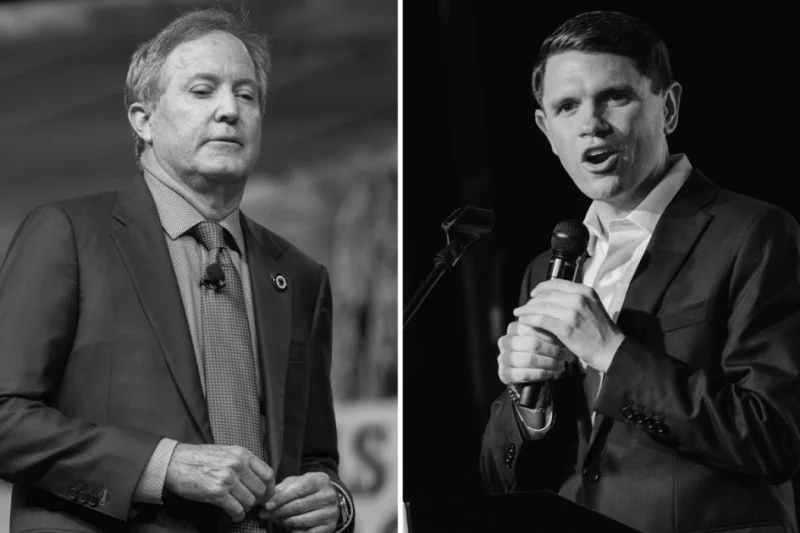
James Talarico went to the steps of the McLennan County Courthouse in Waco on June 18, 2026, and demanded that Ken Paxton release communications from his office showing how a plea deal in the Adam Dean Hoffman child sex abuse case came together. The Democratic U.S. Senate candidate said Texans should be able to see how a case involving a child was resolved behind closed doors.
The demand lands because Hoffman, 49, pleaded guilty under an agreement that required him to serve 30 days in jail, admit to molesting the victim and surrender his law license, but not register as a sex offender. Talarico framed that omission as the central problem, arguing that if the deal was handled properly, Paxton should have no reason to keep the relevant records out of public view.

Last month, The Texas Tribune, The Texas Newsroom and KWBU uncovered the trial transcript and other court records that helped explain how the case reached that point. The reporting showed the case ended in a mistrial and that the victim refused to testify for a second time, leaving prosecutors with a narrow path forward after an initial deal rejected by Roy Sparkman would have allowed Hoffman to serve just one day in jail.
That background is also what gives the fight over Paxton’s records its weight. Assistant Attorneys General Brenda Cantu and Dorian Cotlar wrote in a May 15 letter to a state lawmaker that the plea deal was made entirely in the best interest of the child involved, and they described the child as someone who preferred to move on with his life and spare himself the continued trauma of having to face his abuser in court. Critics, including some Republican lawmakers and the victim’s mother, said the final agreement was too lenient.
Talarico put the issue in the plainest terms at the courthouse, saying that no one, not even the attorney general of Texas, should be able to cover up crimes against children. Whether Paxton releases those communications, and whether they show a careful prosecutorial judgment or a political decision kept from public view, is now the next test in a case that has already made the cost of secrecy impossible to ignore.