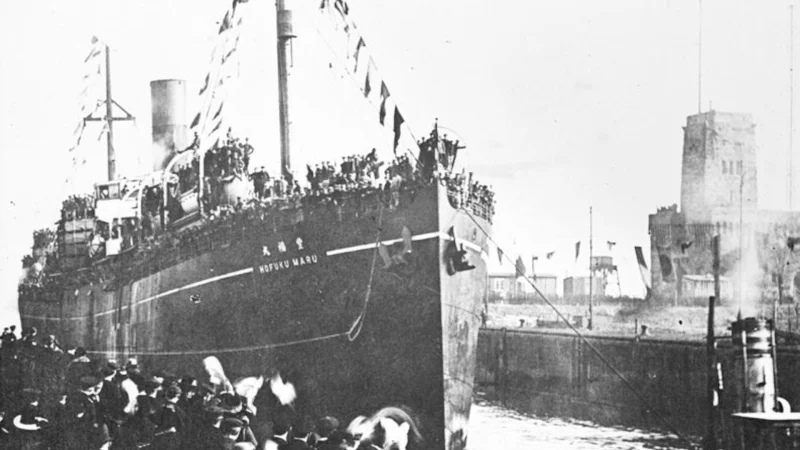
Researchers have located the wreck of the Hōfuku Maru more than 80 years after the Japanese hell ship sank with more than 1,000 Allied prisoners of war trapped aboard. The discovery fixes the vessel’s final resting place on the seafloor after decades of uncertainty and puts a precise point on one of the worst single-day losses of Allied POW lives in World War II.
The wreck is drawing fresh attention now because it is being featured in a new Expedition Unknown episode, with the first part of the two-hour event set for Wednesday at 9 p.m. Eastern Standard Time on the Discovery Channel. For viewers, it is a lost ship finally found. For the men who were inside it, it is the answer to a question that has hung over the war for generations.
The Hōfuku Maru was sailing in Convoy MATA-27 on Sept. 21, 1944, carrying more than 1,000 Allied Dutch and British service members when it was attacked by American planes. The ship was struck by an Allied torpedo, split in half and went under in less than three minutes. More than 1,000 Allied POWs were still in the hold when it sank, making the loss one of the largest single-day losses of Allied POW lives.
What finally moved searchers to the wreck was not a single lucky guess but a match between records that had been sitting in plain sight and records that had been misread for years. John Duresky and Tim Beckensall found a digitized Japanese after-action report written by officers on board the convoy’s lead ship. The report included a hand-drawn account showing the location of each ship in the convoy, along with a note that the Hōfuku Maru sank at 10:35 a.m. An aerial photograph taken by the lead American Curtiss SB2C Helldiver just moments before the attack was also found in plain sight. Put together, the Japanese material and the image gave researchers the attack location and ship impacts that incorrect U.S. records had pushed too far north for decades.
The finding matters because it closes one of the most stubborn gaps in the record of the Pacific campaign. The Hōfuku Maru was one of the hell ships used to move Allied prisoners of war under brutal conditions, and the Japanese did not guarantee their safety at sea or mark the transports carrying them. By the end of World War II, conservative estimates suggest that 50,000 Allied POWs boarded hell ships and 21,000 did not survive; Gregory Michno has said friendly fire accounted for 93% of the deaths on these ships, and by 1944 the prisoners were being packed in numbers six times greater than what had been deemed acceptable at the start of the war.
Capt. Nigel Evans lived through the sinking by boarding another Japanese ship and was later taken to a POW camp in Taiwan. He later testified in British war crimes trials held in Singapore shortly after the war ended. His account of the voyage remains one of the starkest reminders of what those ships were like. Conditions on board became terrible, he said, and it was a common sight for prisoners to eat within six feet of a corpse being prepared for burial. On the day before they sailed, he testified, over a third of the officers and men could not walk unassisted and there were a number of mental cases.
That testimony, and now the wreck itself, leave little doubt about what the search has answered. The ship is found. The location is settled. What remains is the larger reckoning with how many men died in the dark before the Hōfuku Maru disappeared from view.