


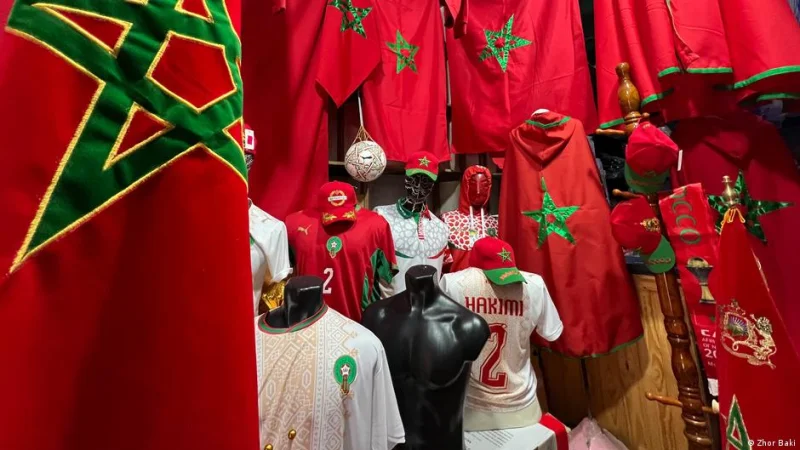
Morocco, Spain and Portugal are linked to the World Cup 2030, and the way it is being framed goes well beyond football. The tournament sits at the historic intersection of Africa and Europe, and for Morocco it is being presented as part of a larger national project rather than a single event on the calendar.
That is why people are searching where is the next 2030 World Cup now. The answer is already taking shape in the buildup to the FIFA World Cup 2026, which is unfolding across North America, while attention also shifts toward the next hosting cycle. Morocco’s place in that story is tied to King Mohammed VI, whose long-term vision has guided the country’s transformation for years.
That transformation is not described in vague terms. It is tied to decades of investment, infrastructure development, industrial growth and economic modernization that have changed Morocco’s trajectory. In that reading, the World Cup is not simply a prize for hosting; it is a test of whether the country can turn global attention into something lasting.
The model being used to judge that ambition is broader than goals and attendance figures. A UK Government strategy paper, Sporting Future: A New Strategy for an Active Nation, marked a shift in how sport is measured, moving beyond participation and medal counts toward physical wellbeing, mental wellbeing, individual development, social and community development and economic development. That same logic is now being applied to World Cup 2030.
And that is where the friction lies. The tournament is being sold as a legacy event, but legacy only matters if the money and planning outlast the final whistle. If the investments do not produce lasting societal, economic and developmental outcomes, the World Cup will be remembered as momentum without residue.
For Morocco, Spain and Portugal, the next World Cup is therefore not just a question of geography. It is a question of whether a cross-continental event can leave behind more than a stadium schedule, and whether the link between Africa and Europe can be made visible in roads, institutions and opportunity as much as in football itself.
