


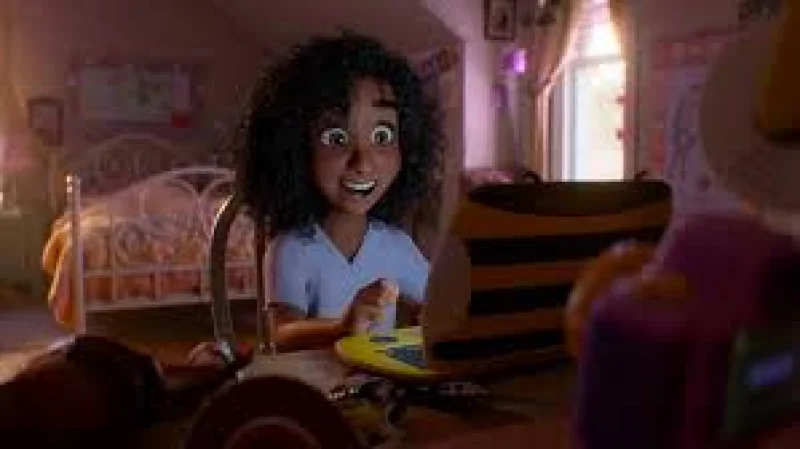
Toy Story 5 gives the franchise a new kind of villain: Lilypad, a creepy tablet voiced by Greta Lee, that enters children’s play as a sleek threat to the toys’ world. The fifth Toy Story film uses that device to put Bonnie, Jessie, Buzz Lightyear and Woody in the path of a danger that is digital, seductive and built to pull attention away from everything they know.
That is why the film is being watched now. Bonnie, voiced by Scarlett Spears, gets a Lilypad and is initially thrilled by how it connects her with other girls before the toy is tied to cruelty and online bullying. Jessie, still Bonnie’s from the fourth movie and voiced by Joan Cusack, runs into a kid called Blaze on a farm, with Mykal-Michelle Harris in the role, while Woody is living a feral outdoor existence away from human control with some other toys and Bo Peep, voiced by Annie Potts, remains part of that broken-up world.
The film’s newest idea is also its sharpest one. It treats Lilypad as a menace first, then steers the character toward sentimental self-sacrifice, a turn that works because the movie defines danger less by the tablet itself than by what it does to the toys’ place in a child’s life. Once Lilypad becomes the thing that can be redeemed, the story stops being about a device and starts being about whether imagination can survive being replaced, then rescued, by the very thing threatening it.
That shift leaves Jessie’s thread to do the franchise’s heavy lifting. The review says a rogue platoon of upgraded Buzzes is needed to sort out her plot complication, a move that turns a family-story conflict into a mechanical rescue operation. Conan O’Brien voices toilet trainer Smarty Pants, Taylor Swift sings a new song in Toy Story 5, and Randy Newman’s When She Loved Me still hangs over the film because it first belonged to Jessie in Toy Story 2, when the series was already learning that these stories work best when play and loss sit side by side.
Toy Story 5 keeps the long-running idea intact: toys have secret lives when children are not looking, and that secret life is getting harder to defend. The franchise has always circled mortality, but this chapter updates the fear for a screen age in which connection can also mean control. By the time Lilypad stops being only a threat, the film has already made its point. The toys are not just fighting for attention. They are fighting for the right to exist in a child’s imagination at all.
