


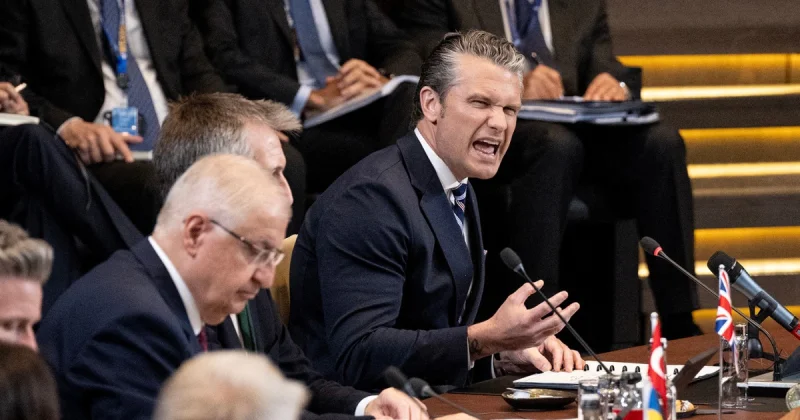
Defense Secretary Pete Hegseth opened a six-month Pentagon review of American forces in Europe on Thursday, putting U.S. military posture on the continent under fresh scrutiny just as Washington presses allies to do more of the work themselves. He said the review would be a real test of whether NATO is moving fast enough toward Europe leading its own defense.
Hegseth delivered the message directly to his NATO counterparts in Brussels, where he said the alliance must move “fast and irreversibly” toward Europe taking primary responsibility for Europe’s defense. He framed the review as a way to decide how much of the U.S. footprint should remain tied to that goal, and how much can be shifted as the Trump administration looks at the possibility of a broader confrontation elsewhere.
The timing matters because the Pentagon is not reviewing forces in a vacuum. Since June 3, NATO’s top military commander has been drawing up backup plans after the United States signaled it would no longer provide an aircraft carrier, support ships, aerial refueling planes and dozens of fighter jets in a crisis. That is the clearest sign yet that Washington wants Europe to carry more of the burden while also keeping more American power available for other demands.
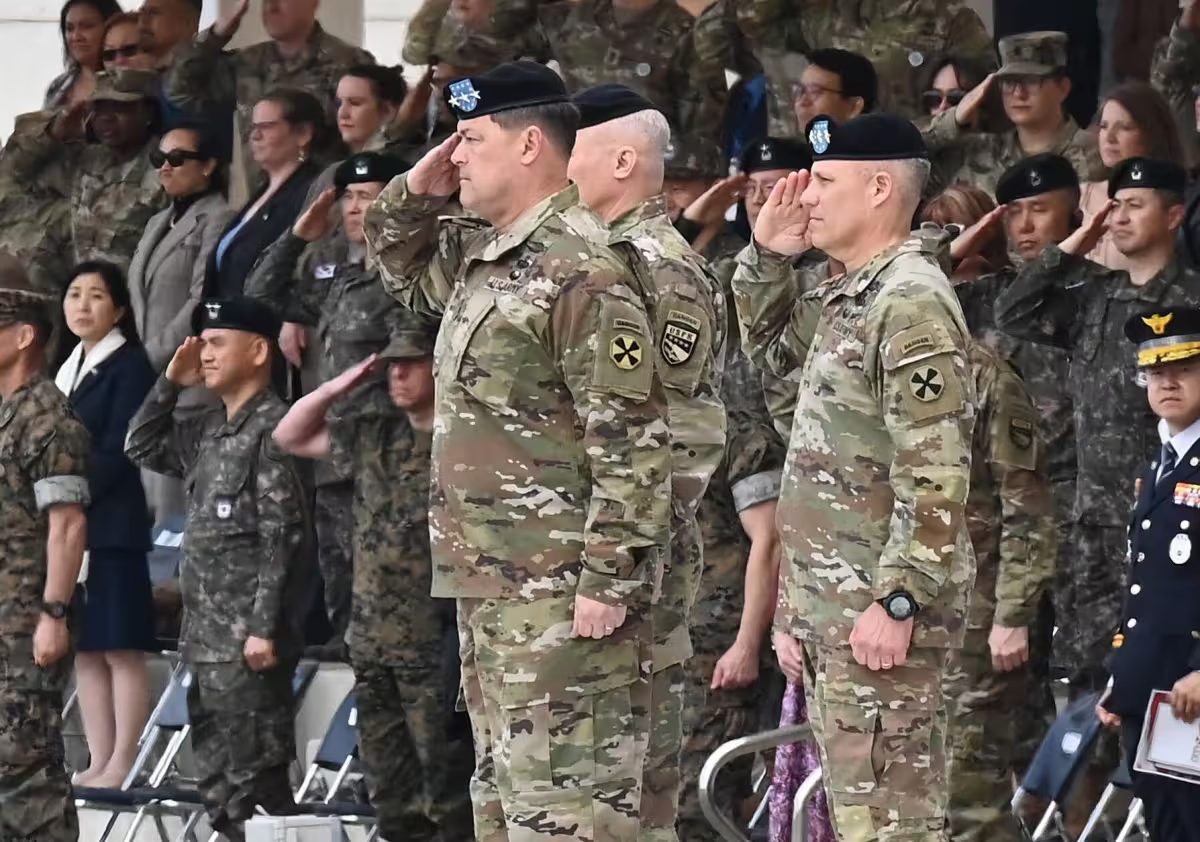
Hegseth made the argument in sharper terms when he called it shameful that European allies had not given U.S. forces predictable access to bases, basing rights and overflight for possible attacks on Iran. He said those limits put America’s sons and daughters at risk, and used the moment to call for a reboot of the 32-nation NATO alliance into what he described as NATO 3.0, a harder-edged force built around conventional deterrence on the continent.
The friction is clear: the United States is asking Europe to take responsibility for its own defense while still relying on NATO’s structure, including Article 5 and the alliance’s collective promise that an attack on one is an attack on all. Hegseth also said the United States would invest $1.5 trillion in its own defense in 2027 and that America’s arsenal of freedom still backstops NATO, but he drew a line between support and dependence.
What changes after the six-month review is still the open question. The facts on the table point to U.S. air, naval and fighter support in Europe as the most exposed pieces, not nuclear weapons, which the United States does not intend to withdraw. For now, the review looks less like a routine reassessment than a warning that the U.S. role in Europe will be judged by how quickly Europe proves it can stand on its own.
