


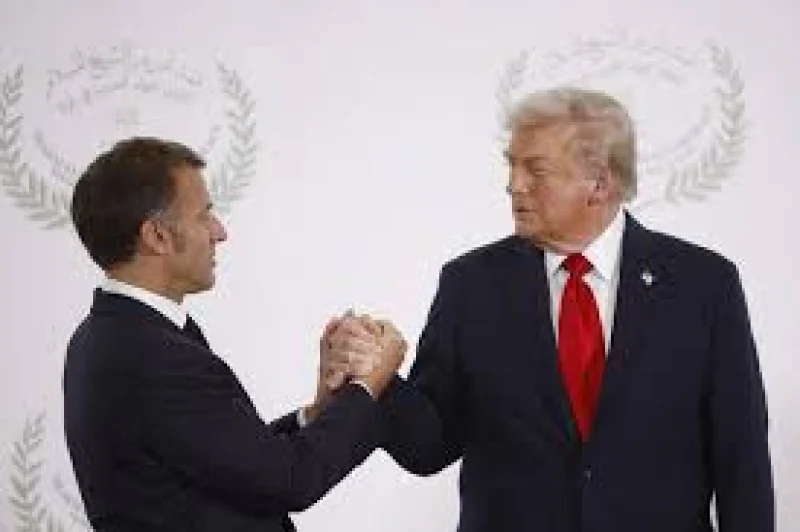
Donald Trump was due at the Palace of Versailles on Wednesday night as Emmanuel Macron turned a dinner into a political message: France was marking the 250th anniversary of US independence, and Trump was the guest of honour. Before the meal, he was set to tour a temporary exhibition on French-US relations and the Hall of Mirrors.
That choice gave the night its edge. The Élysée said Versailles fit the occasion because it is a historic symbol of Franco-American friendship, while Macron argued it was not a gala dinner but a moment to mark France’s role in American independence. Trump, who called Versailles “the real deal” and said, “I’m a fan of beautiful places,” seemed happy to accept the setting.
But the invitation quickly became about more than commemoration. French left-wing politicians read it as a bid to keep Trump engaged through the end of the G7 summit, and Fabien Roussel called Macron’s move “very naive” and “obsequious.” Mathilde Panot said the flattery was not working, while Éric Coquerel said there was too much grovelling to a US that was becoming increasingly aggressive and very imperialist.
The criticism landed because the symbolism cuts both ways. Versailles is tied not only to the monarchy of Louis XIV but also to the French Revolution of 1789, which made the palace a national emblem; using it to host Trump while Macron emphasized gratitude for American independence was meant to project history, not submission. Yet in France, where Trump had already mocked Emmanuel Macron and Brigitte Macron during a private lunch in Washington, the dinner looked to some like a fresh attempt to smooth over a relationship that has often been blunt in public and awkward in private.
The unanswered question is whether the dinner and palace tour were enough to keep Trump at the G7 summit in Évian-les-Bains through its final stretch. That mattered because Macron was trying to hold the summit together while Trump had already warned before it began that the US would have no choice but to apply 100% tariffs on French wine unless Paris scrapped a digital services tax. Versailles was meant to be a bridge; for Macron, the risk was that it would be remembered as flattery instead.
