


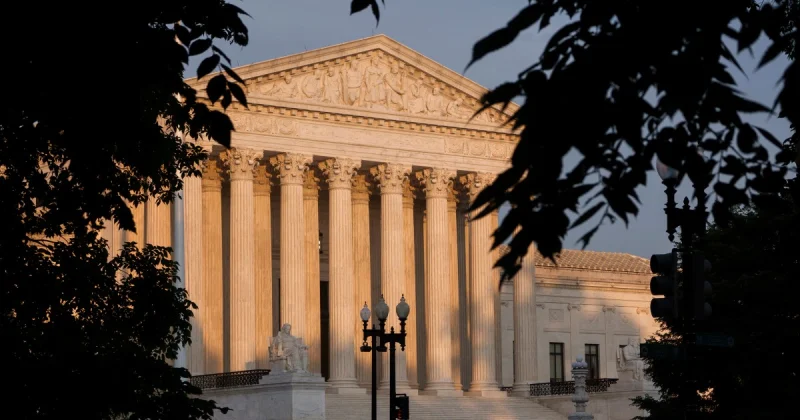
The Supreme Court is set to rule in the coming fortnight on Donald Trump’s attempt to limit birthright citizenship in the United States, a case that could decide whether babies born on U.S. soil to parents without legal status or to temporary visitors receive citizenship. The next ruling day is Thursday.
That makes the case one of the clearest tests this term of how far the court is willing to go in a flurry of major decisions involving Trump. The justices, who hold a 6-3 conservative majority, still have 20 cases left to decide in a term that began in October and generally ends at the close of June.
Trump has made no secret of how much he wants this fight. In April, he became the first sitting president to attend the birthright citizenship oral argument, and last week he used Truth Social to say the United States cannot live with the “shackles” of birthright citizenship and that no other country of consequence does it. His proposal would not grant citizenship to babies whose parents do not have legal status in the United States or are temporary visitors.
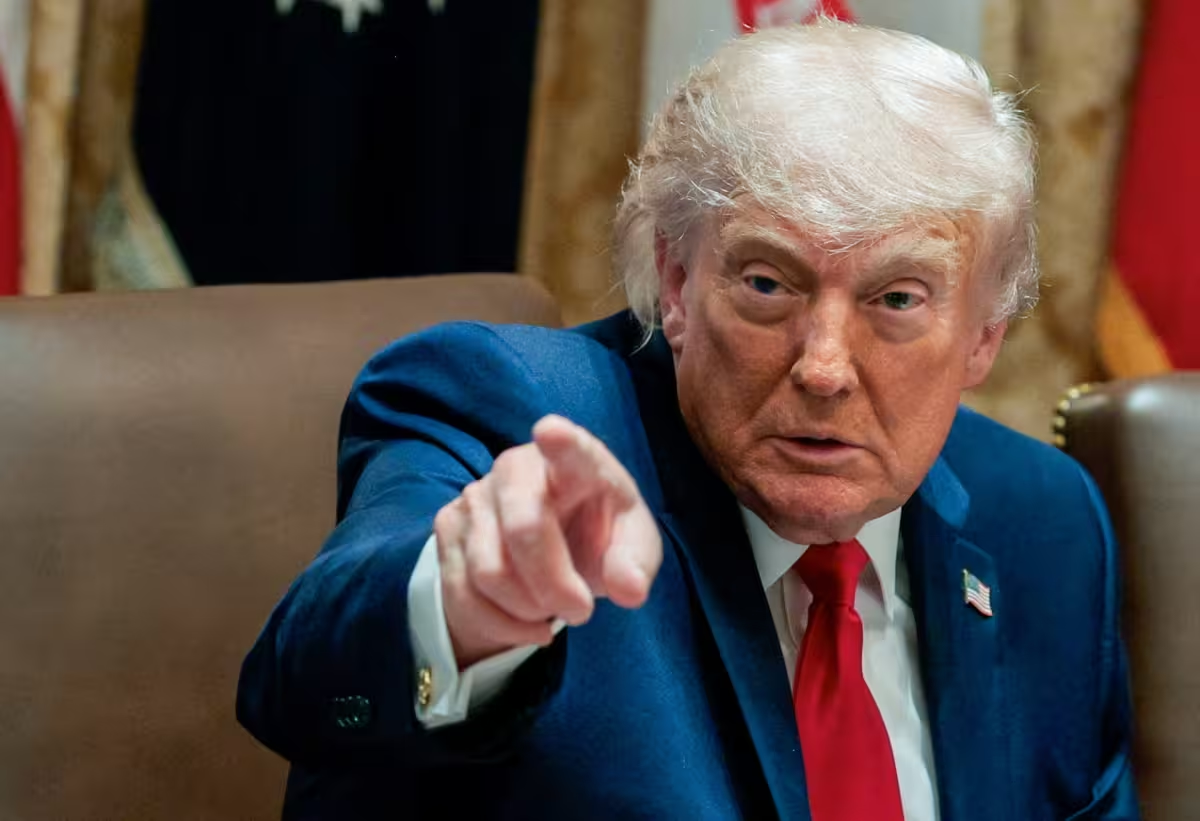
The legal question reaches beyond the policy itself. Trump has already taken a major loss at the court this year, when the justices blocked his sweeping tariffs on imports from around the world in February, and he is now pressing an equally broad view of executive power across multiple fronts. Robert Luther III, a constitutional law professor at the Antonin Scalia Law School at George Mason University, said the court continues to move “in a pro-executive direction,” even if it may still deliver a few losses to Trump.
That tension is showing up in the cases now before the court. The justices seem likely to rule against Trump on his effort to fire Lisa Cook from the Federal Reserve Board of Governors, after refusing last fall to let him remove her immediately, and they are also considering whether to strip protections from thousands of Haitian and Syrian immigrants. On birthright citizenship, the open question is not whether Trump wants a sharp break with longstanding practice, but whether the court will say the Constitution leaves him room to make it.
If the justices do draw that line on Thursday, they will be doing more than resolving a single policy dispute. They will be saying how much of Trump’s agenda can be imposed by presidential force alone, and how much must still run into the limits the court is willing to enforce.
