


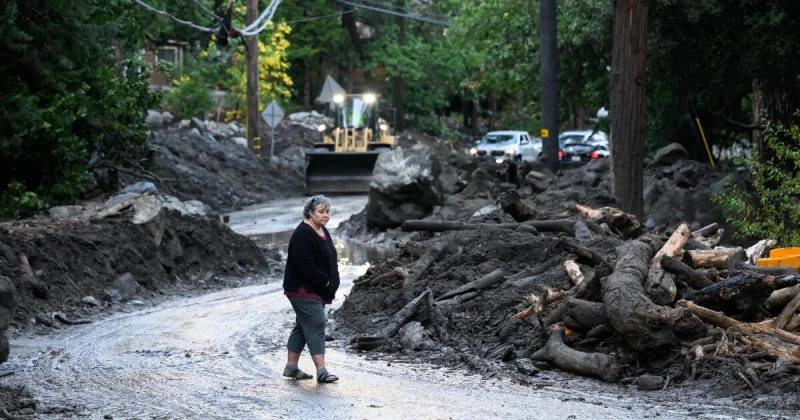
NOAA said El Niño has arrived and now gives it a 63% chance of becoming very strong toward the end of the year, with an 88% chance it will be either strong or very strong. That matters because the weather signal is usually felt most sharply in winter, when California and the rest of the West Coast of the U.S. are most exposed to its effects.
The forecast is why the search interest is spiking now: a stronger El Niño can tilt the odds toward wetter winters in Southern California and more stormy weather in the southern United States, while the Pacific Northwest generally turns drier. NOAA also says elevated sea levels along the coast can make high tides and strong surf ride higher and push much farther inland than normal, with major events raising local sea level by around six to 10 inches in California during the winter rainy and stormy season.
The numbers behind the warning are not abstract. Of the last four very strong El Niños on record, the 1982-83 and 1997-98 events brought coastal Southern California more than double its typical annual rainfall, and the 1991-92 event brought 133% of the average annual rainfall there. Jan Null, who has tracked the region’s rainfall history, has also shown how uneven the results can be: the 2015-16 El Niño was expected to deliver more, but the Southland ended up with only 77% of its annual average.
That gap is the reason this forecast should be read as a risk statement, not a promise. NOAA experts said the 2015-16 and 2023-24 El Niños brought more frequent, deeper and widespread high-tide flooding, and the California Coastal Commission said 2015-16 brought record coastal erosion along many California beaches. Daniel Swain has argued that the rapidly escalating conditions in the tropical Pacific and the extreme model projections suggest something extraordinary could unfold, but he has also tied the biggest consequences to the same caveat that has hung over every recent El Niño: whether the atmosphere actually couples with the Pacific in the way the models expect.
Swain said a very strong El Niño could be the single most important predictor of unusually wet conditions and heavy precipitation events in California, and could also be an early warning for large-scale flood events. He has also written that a wet winter could bring some relief to the Colorado River basin, which remains in an exceptionally severe multi-decadal drought. The next test comes as winter closes in: if this event strengthens as NOAA now expects, California may get the wet, damaging storm pattern that some strong El Niños have delivered before, but the last one showed how easily that outcome can fall short.
