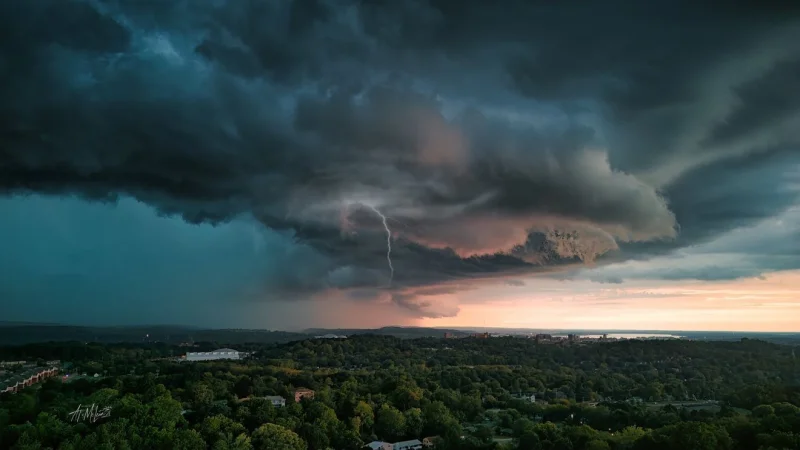
A line of heavy downpours and thunderstorms was moving across many sections of Upstate and Central New York late Sunday afternoon into early evening, with severe thunderstorm alerts in effect for portions of CNY through Sunday evening. The storm line was enough to put much of the region on notice for damaging wind, hail and sudden flooding as the weather turned fast and loud.
The search term thunderstorm matters now because the alert was active while the line was still crossing the region, not after it had passed. A severe thunderstorm warning means a particular storm is much more likely to produce damaging wind and hail in the warned area, and severe storms can bring winds of at least 58 MPH along with quarter-sized hail or larger. Destructive wind damage becomes possible at 80+ MPH, and destructive hail damage is defined as baseball-sized hail.
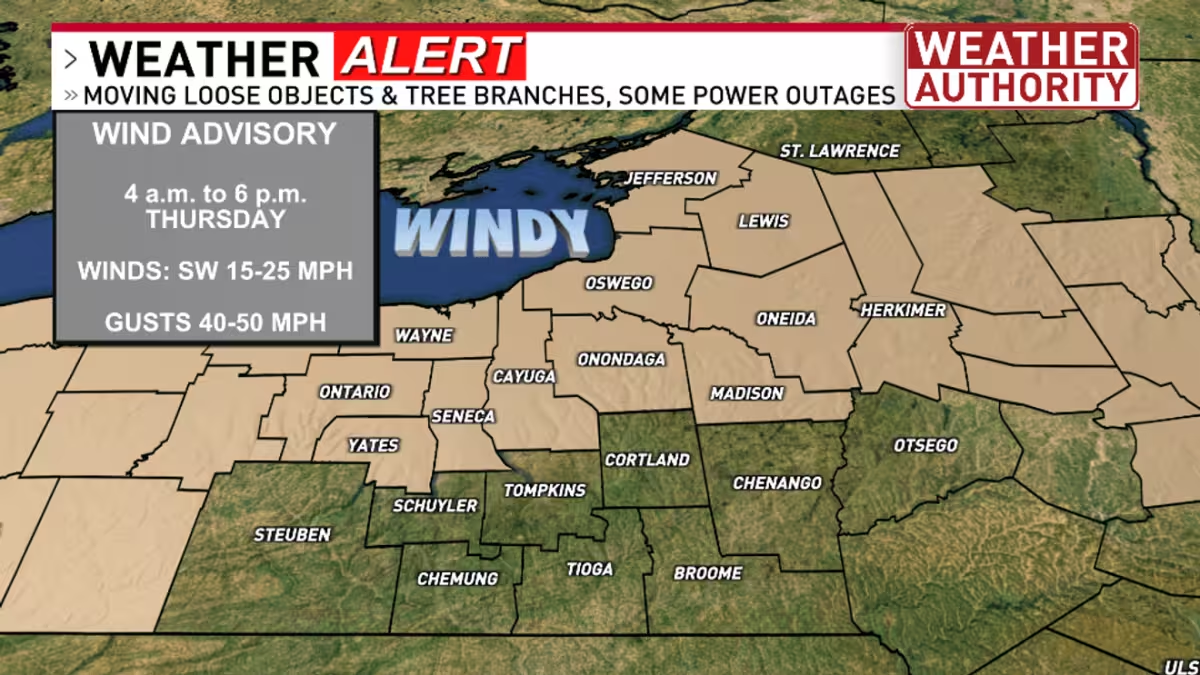
The reason the alerts drew attention beyond the storm itself is that heavy rain can overwhelm roads in a hurry. Localized minor flooding was expected in poor drainage areas, especially in low-lying spots and underpasses, and ponding of water was likely on some highways and streets. A flash flood warning means rapid life-threatening flooding is occurring or will soon begin, while a flood advisory means excessive runoff from heavy rain will make small creeks and streams rise.
That is the friction in this kind of weather: many spots may only get downpours, lightning and thunder, but the same storm line can still turn dangerous quickly enough to require warnings. Even if the storms do not become severe, lightning can knock out power by striking poles or substations. If a warning is issued, people outdoors should get inside a home, a strong building or a car, boaters should head to shore immediately, people indoors should move to an interior room on the lowest level and stay away from windows and doors, and drivers should pull over until the storm passes. People should never try to drive through water covering the road, even if it looks shallow.
The alerts were set to run through Sunday evening, which left the immediate question not whether the weather was active, but which parts of CNY would take the heaviest hit before the line moved on. WSTM’s Interactive Doppler Radar and Live Triple Doppler Radar were the tools used to track where the worst cells were headed next.