


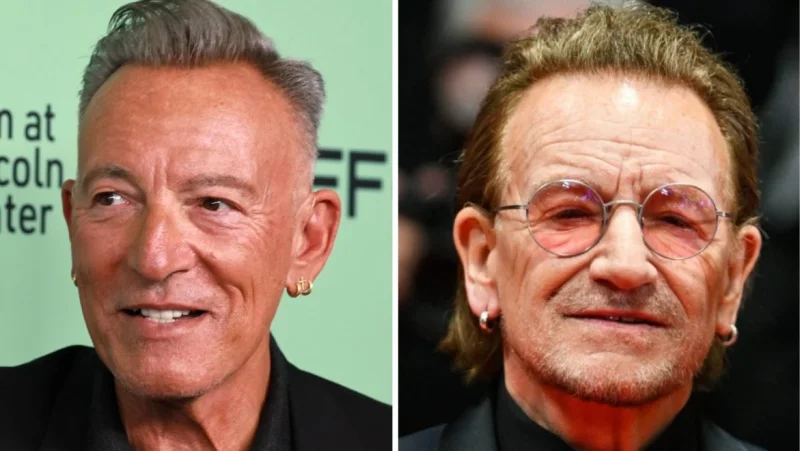
Bruce Springsteen took the stage at the Tribeca Festival on June 13 and called himself “a little embarrassed to get this award” before accepting the Harry Belafonte Voices for Social Justice Award. By the end of the evening, he had also done something rarer than a thank-you speech: he apologized to Bono for turning down a commercial song request years ago and admitted, “I should have said yes.”
The night put Springsteen, Bono, Patti Smith, Robert De Niro and Jane Rosenthal in the same room in lower Manhattan for a conversation that moved from music to politics without much hesitation. Springsteen said he was “just a concerned citizen,” while Robert De Niro praised him as a man who knows how to use his voice to give voice to the powerless and lead the resistance. For readers searching his name now, the reason is simple: the appearance tied a live award moment to a very specific old answer he seemed ready to revise.

Springsteen dedicated the honor to the people of Minneapolis, Portland and Los Angeles for standing against the federal invasion of their cities this year. He said he had to make his stand and follow his beliefs, and that America is a sacred argument and a compromise. Bono pressed him on whether speaking out had cost him fans, and Springsteen said he was not sure, adding that no one should have expected anything different from his recent tour. “I warned everybody what the tour was gonna be like so they didn’t waste their money before they came,” he said.
That exchange gave the night its sharp edge. Bono said he had repeatedly asked Springsteen to sign petitions and had been politely but firmly turned down, then recalled asking him to license “Girls In Their Summer Clothes,” his 2007 song, for a Gap commercial. Springsteen had said no, but at Tribeca he called it “a big mistake, too,” and said, “I should have said yes.”
The event came on the final day of the Tribeca Festival and doubled as a discussion of democracy, federal overreach and Springsteen’s long-running political activism. What remains unresolved is not whether he was willing to speak; he clearly was. It is whether that old refusal, once treated as settled, now sounds like one more battle he would choose differently.
