


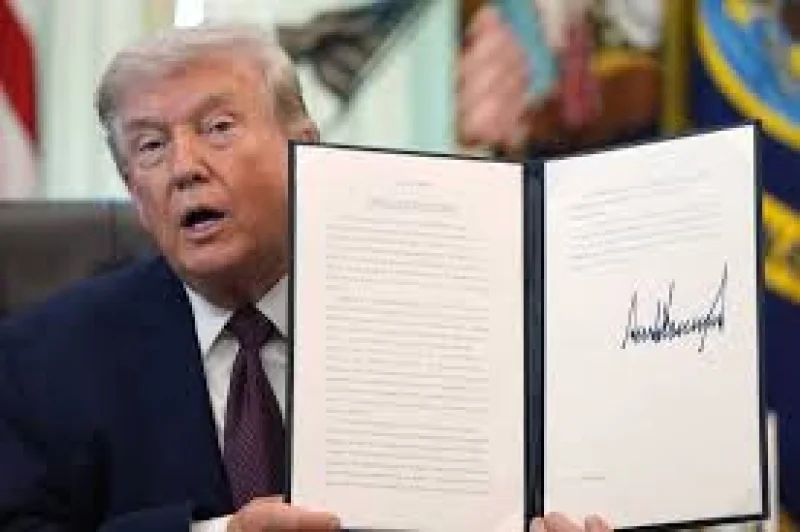
A federal judge on Friday declined to block Donald Trump’s executive order aimed at mail-in ballots, saying Democrats who sued over the directive had moved too soon. U.S. District Judge Carl Nichols ruled that the challenge was premature because no federal agency had yet taken steps under the order that could harm the plaintiffs.
The decision leaves Trump’s May 31 directive in place for now. The order would create one federal list of citizens eligible to vote and ask the U.S. Postal Service to mail ballots only to people on it. It also directs the Department of Homeland Security to build state citizenship lists from federal citizenship and naturalization records, Social Security records and other federal databases so election officials can verify voter rolls and decide who is eligible to vote.
Nichols, whom Trump nominated to the bench in June 2018, wrote that the order “does not command Plaintiffs to do anything” and that “no agency has yet acted pursuant to the Order in a way that could harm Plaintiffs.” He added at a May 14 hearing that the court did not know “how DHS is going to compile the list” and that “we don’t know, sitting here today, whether any of these steps are going to take place.” That left the door open for a fresh injunction if the administration starts carrying out the plan.
Among the Democrats who filed the original challenge was Senate Minority Leader Chuck Schumer. They argued the executive order is unconstitutional because it intrudes on states’ rights to run elections, a line of attack that goes to the core of how American voting rules are set. Heather Williams of the Democratic Party called the move “voter suppression,” “a desperate move by Trump to steal the next election,” and “a blatant attempt by the president to undermine states’ control over election administration for his own benefit—which is a direct attack on the Constitution and our democracy.”
The fight is arriving as Trump keeps pressing his long campaign against mail-in voting, even as he himself used it in March to cast a ballot in a Florida special election for a district that includes Mar-a-Lago. He has repeatedly pushed the debunked claim that mail ballots fueled widespread fraud in the 2020 election, and he signed the order claiming it would “enhance election integrity” via the U.S. Mail. The stakes are sharpened by the calendar: Republicans were expected to suffer major losses in November’s midterm elections, while Democratic voters have traditionally favored mail ballots and Republicans have tended to vote on Election Day. For now, Nichols has said the court will wait until the government actually acts before stepping in again.
