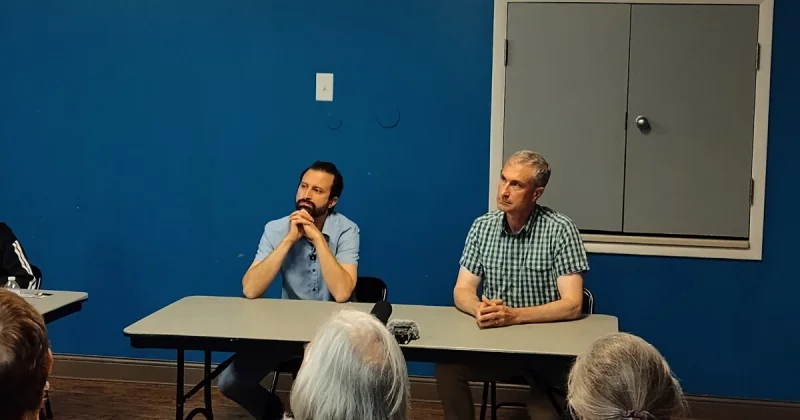
Six candidates running in Ann Arbor’s local races faced voters Monday evening at Arrowwood Community Center, where about 100 Washtenaw County residents heard them make their case on probate court, city planning and development decisions now moving through city hall.
The forum brought together candidates for Ann Arbor mayor, Washtenaw County probate judge and Ann Arbor City Council’s First Ward, giving voters a direct look at the people who could shape how the city handles estate matters, housing and land use. That matters now because the discussion came as local elections are underway and as residents are watching a recently approved city financing package that exceeds $300 million.
Much of the attention centered on the probate race, where Alethia Battles and Jennifer Lawrence tried to define a job that often gets flattened into its most familiar image: family disputes over estates. Battles, who has 30 years of clinical social work experience, said the role reaches far beyond that. She is now associate general counsel at the University of Michigan and previously handled probate matters for Michigan Medicine. Lawrence, a lifelong local resident with experience in law and business, said she has spent the past 10 years focused on probate, family law and mediation after work as a judicial clerk in corporate law and as a criminal defense attorney.
Both candidates stressed that the seat demands courtroom experience and a steady hand. Battles said probate judges also deal with guardianship and conservatorship cases, as well as living wills, trusts and estates. Lawrence called it a heavy family law and litigation bench, warning that anyone who has not worked on family law or restraining orders would be stepping into difficult cases from day one. Their comments framed the race as a question of readiness, not just résumé length.
The local housing debate was just as pointed. Cynthia Harrison, the Ward 1 councilmember who also directs Innovative Reentry at the Washtenaw County Sheriff’s Office, said she backed the Arbor South project because it includes 209 affordable units. She also linked the project to higher recidivism among people experiencing homelessness, a detail that underscored how housing policy and public safety concerns are being discussed together in Ann Arbor. But the financing package under discussion also includes money for a parking structure at the Oxford Ann Arbor South development project, a fact that sits uneasily beside the project’s affordable-housing appeal.
That mix of support and skepticism is what made the forum more than a routine campaign stop. Rebecca Arends, a Ward 1 candidate and licensed master social worker who once owned a local massage therapy business, was among those on stage as voters compared approaches to development, city planning and the University of Michigan’s land acquisitions. The financing package has already been approved, but the questions around Arbor South and the broader direction of city growth are still in front of residents who will live with the results long after Monday night’s applause faded.