


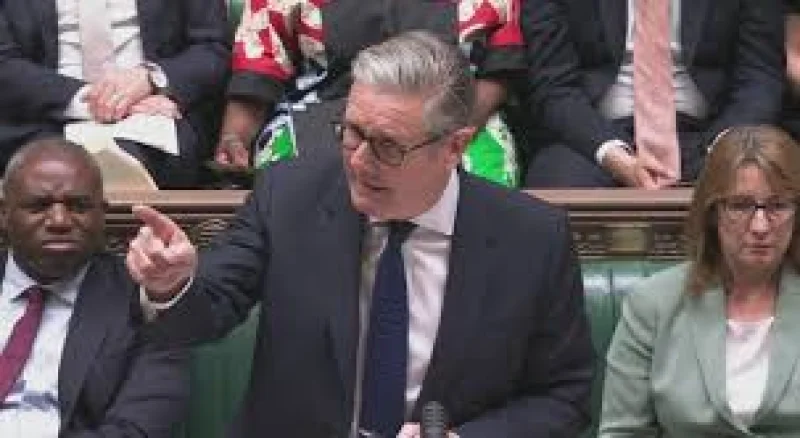
Keir Starmer and Kemi Badenoch clashed at this week’s Prime Minister’s Questions over defence spending, with the opposition leader pressing the prime minister on why the government still has not published its defence investment plan. Badenoch accused Starmer of dithering and said his legacy would be a bloated welfare state and a weaker armed forces.
The exchange landed now because Starmer told MPs the plan will be set out very soon and before the Nato summit in July, after weeks of scrutiny over how fast Labour will move to reset defence policy. The question hanging over the government is not whether it wants to raise spending — it has already committed to lift Nato-qualifying defence spending to 2.5% of GDP by 2027 — but how it will explain the route to that target.
Badenoch also claimed the government is cutting £3.5bn from defence spending. That charge has become the sharpest attack line in the row, but it sits uneasily beside the June 2025 Spending Review, which set defence budget plans to rise from £62.2bn in 2025-26 to £65.5bn in 2026-27, a £3.3bn increase. A report said the £3.5bn figure appears to stem from an April Sky News report that defence chiefs had been asked to find £3.5bn in efficiency savings in 2026-27.
Starmer pushed back hard, saying his government would not take lectures on defence from the Tories and stressing that Labour has increased defence spending. The verbal clash gave both sides what they wanted politically: Badenoch framed the delay as proof of drift, while Starmer argued his government was already spending more and would publish the plan shortly.
Tanmanjeet Singh Dhesi, the Labour MP who chairs the defence select committee, widened the debate by pointing to the state of the world, from Russia to the US, and asking whether Starmer would agree to 3% GDP spend on defence in the coming investment plan. Starmer said Dhesi was right to raise those concerns, but he did not go that far, leaving the larger spending question open even as he repeated that the government has already boosted defence outlays.
That is the pressure point in the row: the government says the money is going up, the opposition says the plan is missing, and the detailed path from 2.5% of GDP to anything higher remains unpublished. With the Nato summit in July approaching, the next test is whether Starmer’s defence investment plan sets out a clear timetable, a credible funding route and an answer to MPs who want more than another promise of what will come soon.
Elsewhere in PMQs, Ed Davey raised violence in Belfast and a knife attack there, underlining how the session was dominated by questions about security at home and abroad.
