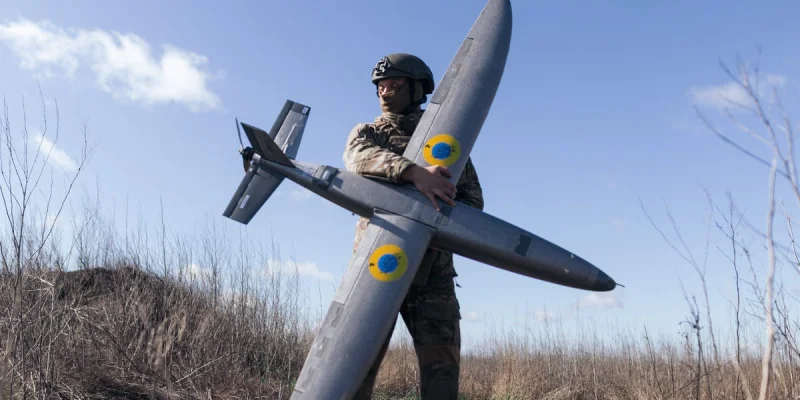
A Ukrainian National Guard drone pilot with the call sign Spring says mid-range strike drones are now being used to hit Russian logistics, command posts and transports deep behind the front, while some of the systems reaching her unit are so unreliable they fail basic checks before they ever fly. The drones are extending Ukraine’s reach into areas Russian commanders had treated as safe, but Spring says the quality of what arrives can vary wildly.
The timing matters because these fixed-wing drones, typically classed as systems that can fly between 18 and 180 miles, have become one of Kyiv’s most important ways to keep pressure on Russian rear areas. Analysts say they have helped Ukraine consistently strike logistics, command posts and transports, and Spring says their ability to reach targets reliably at 25 miles and beyond has contributed to a net loss of territory for Russian forces in the last few months.
Spring has spent the past year and a half testing that capability from the Ukrainian side. She began working with Typhoon’s mid-range strike drones early last year and has since tested more than 10 types, most of them Ukrainian-made. Her specialty is systems that fly between 40 and 60 km, and she says her job is to separate the drones worth sending to combat crews from the ones that should never leave the range.

The first system she tested in early 2025 was, in her words, practically cursed. The fixed-wing drone’s camera feed would cut out, the software would stall before takeoff, controls would go dead after a few minutes and batteries would fail. “In every sortie, everything that could go wrong went wrong,” Spring said. She said some drones are approved after only a few tests if they perform well on delivery, while others need dozens of flights before anyone will trust them.
That uneven quality is part of the strain. Spring said the drones she tests cost between $1,000 and $15,000 each, which makes a faulty batch expensive for a unit that depends on every flight. Some systems also come with AI targeting that can keep the aircraft flying and searching after it loses connection with the pilot’s control station, but even that does not make up for poor manufacturing. “If a manufacturer is not responsible, I do everything possible to prevent their system from reaching combat crews in our unit,” she said.
The larger problem is that the technology is moving faster than the pipeline that checks it. Spring said manufacturers are developing drones at breakneck speed and then sending them to experienced combat pilots for testing, but some systems are already reaching the front for combat use before they are fully reliable. That can waste money, time and scarce combat sorties, even as the better drones keep forcing Russian forces to protect the rear areas they once assumed were out of reach.
For Ukraine, the question is not whether mid-range strike drones matter. It is how many of the next deliveries will be good enough to keep the pressure on Russian supply lines, command sites and transports without sending another broken aircraft into the fight.