


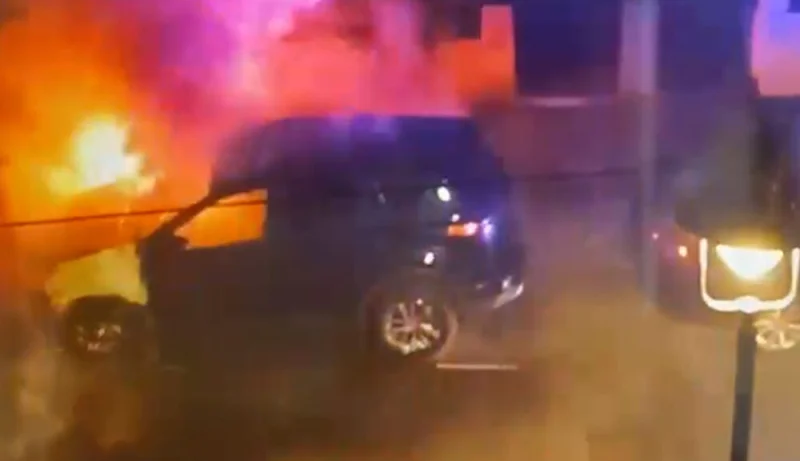
Stanislav Carpiuc told the Old Bailey he refused to film the alleged arson attack on Sir Keir Starmer’s former Toyota, saying Roman Lavrynovych wanted to set fire to the car and wanted him to make a video. Carpiuc said he called the idea “pure stupidity” and told Lavrynovych that walking around city streets setting fire to cars was not a good idea and was a very serious crime.
The car was set alight on 8 May 2025 in a street where Starmer once lived, one of three incidents prosecutors say were linked to property targeted in May 2025. Carpiuc, 27, told jurors he was working at a west London hotel between 2100 BST on 8 May 2025 and 0900 on 9 May 2025, placing him away from the fire when it happened.
His account came at the Old Bailey in the case against three defendants: Carpiuc, Lavrynovych and Petro Pochynok. All three deny targeting two properties and a car linked to the prime minister, and they are charged with conspiring together and with others to damage property by fire between 1 April 2025 and 13 May 2025. Lavrynovych has admitted starting the fire.
Carpiuc said he rejected any involvement in the plan but still passed on contact details for Pochynok. He told the court he later received a phone call from Pochynok because Lavrynovych had set fire to a car, then spoke to Lavrynovych himself and told him he had gone mad. The exchange, if accepted by the jury, cuts against any suggestion that Carpiuc joined the alleged plot; if rejected, it leaves the court weighing one defendant’s effort to distance himself from a fire already under way.
The timeline matters because the charges cover a span from 1 April 2025 to 13 May 2025, placing the alleged conspiracy squarely around the 8 May blaze and the days that followed. Carpiuc also said Lavrynovych wanted money by 10 May to pay for his father’s medical treatment, a detail that may help explain the pressures around the case but does not answer the central question before the court: who did what, and with whose agreement, in the run-up to the fire.
Carpiuc’s evidence was direct and specific. He said he was “scared” when he heard what had happened, and he repeated that he had told Lavrynovych he was “gone mad.” Those words are now part of a case that turns on intent, association and timing, with the jury having to decide whether Carpiuc was an unwilling bystander, an accessory to a plan, or something else entirely.
