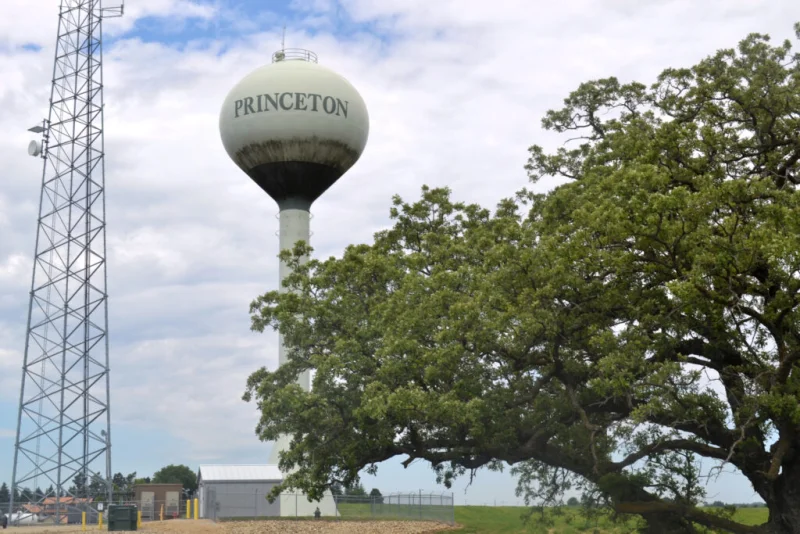
Princeton, Iowa shut down a new well in September 2024 after state testing found the water carried too much nitrate to meet federal drinking-water rules. The town had spent nearly $800,000 on the project, hoping it would give the nearly 1,000-person community a second source of clean water.
The problem was not a small miss. The latest sample came back at 12.1 milligrams of nitrate per liter, above the EPA limit of 10 milligrams per liter, and city officials immediately took the well out of service. That left Princeton relying on its main well, drilled in 1963, to supply the town’s 350 households and businesses.
For Princeton, the shutoff was supposed to end a long stretch of water trouble, not start another one. In late 2022, an overly powerful pump set off eight months of costly water main breaks, and before that the city had already lost its old backup source. Princeton capped its 40-year-old auxiliary well in 2009 after years of state violations for high nitrate levels, leaving the town without any reserve water supply at all.
Chris Rindler, who has been pressing the case for a dependable backup, said the town cannot leave that gap open. “We have 1,000 people that need water, potable water. And to not give them that reliable backup, well, I don’t think that’s an option,” he said. That concern only sharpened after concentrations at the decommissioned well peaked in spring 2025 at around 16 milligrams per liter, and since the shutdown not a single sample has fallen within the allowable range.
The city had hoped the new well would ease pressure on the aging system and create room for growth, but instead it produced unsafe nitrate levels and was taken offline before it could serve that role. Princeton is still collecting samples from the decommissioned well, but the unanswered question is no longer whether the water is safe; it is whether the town will drill again or find another long-term way to protect its supply.