


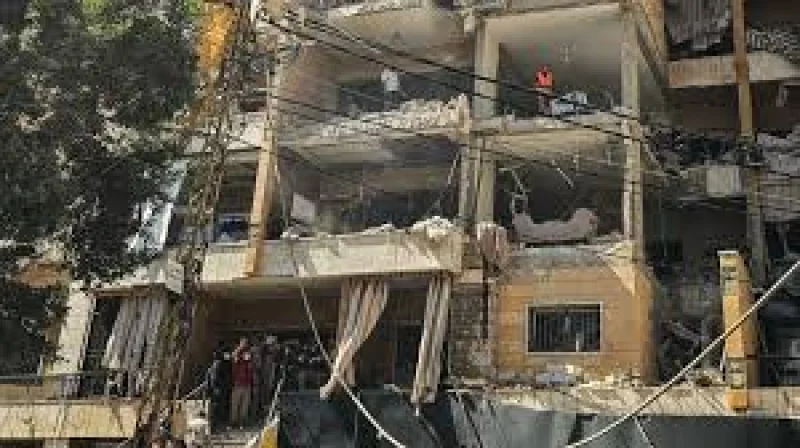
Israel struck southern Beirut on Sunday, hitting two apartment buildings in the Dahieh district in the first attack on the Lebanese capital since a US-brokered truce last week. Two people were killed and at least 20 wounded, including women and children.
The strikes landed in a part of beirut long identified with Hezbollah, and they came after a brief lull that had already begun to look fragile. Lebanese health officials said four women and four children were among the injured, a toll that turned the attack from a military message into a fast-moving civilian emergency.

Prime Minister Benjamin Netanyahu said Israel had hit “terrorist headquarters in the Dahieh district of Beirut, in response to Hezbollah's firing at Israeli territory,” while an Israeli army Arabic-language spokesman said “Hezbollah terrorist infrastructure” was being targeted. The Israeli military said it intercepted two projectiles crossing into Israeli territory from Lebanon. Hezbollah said it had fired rockets at Israeli artillery positions at Yiftah Barracks and at troops near al-Marj Pond, saying the barrages were in response to Israel’s “violation of the ceasefire and the attacks on villages in southern Lebanon.”
The exchange matters because Beirut had become the edge of the conflict that the truce was meant to hold back. A week before the 3 June truce, Israel had threatened a broad offensive on Dahieh, prompting people to flee and drawing American diplomacy into the effort to keep the fighting from widening again. Since 17 April, a ceasefire has existed in name only, violated repeatedly by both sides, but Sunday’s strike marked the third attack on the capital since it took effect and the first since the new truce.
That makes the next move harder to read and more dangerous. Ebrahim Rezaie promised “a decisive and painful response” to the attack on Beirut, and an Israeli Arabic-language spokesman also pointed to more Hezbollah infrastructure as a target, suggesting the pressure is not over. Trump, meanwhile, said in an interview on Sunday that he was not demanding Lebanon be part of any peace deal with Iran and had previously said there would be “no troops going to Beirut” after a call with Netanyahu. For now, the truce is still standing, but Sunday’s strikes showed how quickly beirut can turn from a bargaining chip into a battlefield again.
