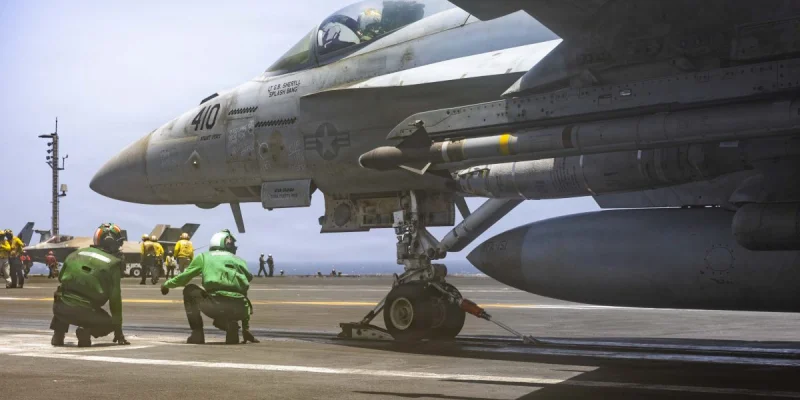
U.S. forces have quietly helped about 70 ships move in and out of the Persian Gulf over a recent three-week span, a sign that Strait of Hormuz oil shipping is still being managed under military watch even as officials stop short of calling it an escort mission. The traffic has been moving through a narrow, contested waterway where advice, radar tracking and quick reaction now matter as much as speed.
The latest tally shows nearly 1,000 commercial vessels passed through the strait over the last two months, or about 17 ships a day. That is a sharp drop from the more than 100 ships a day seen before the U.S. and Israel launched their war on Iran on Feb. 28, and it helps explain why shipping companies are still leaning on the safer lane near Oman’s coast.
Most of those nearly 1,000 vessels were large cargo ships and container ships, underscoring that the route remains commercially vital even at reduced volume. U.S. Navy data published by the Joint Maritime Information Center counted 558 cargo ships and oil tankers crossing the strait from March 1 to June 3, while Kpler counted 895 ships from March 1 to May 19, two estimates that point to steady but cautious movement through the chokepoint.

That traffic is being shaped by the lane the Islamic Revolutionary Guard Corps set up soon after the war began. Since then, the IRGC has charged tolls on ships it allowed through and attacked vessels that tried to cross without permission, pushing more traffic toward the alternate route along Oman’s coast. The U.S. Navy began mine-clearing operations in April and sent two destroyers through the strait that same month to re-establish freedom of navigation near Oman’s waters.
There is, however, a gap between the public line and what is happening on the water. Central Command says it is not escorting ships and is only offering advice to commercial vessels in the region, yet maritime sources say U.S. forces have quietly guided ships through the strait while keeping watch with radar, drones and other tools. U.S. crews also advise ships when to turn off AIS and how to respond to Iranian threats, a level of hands-on help that sits somewhere between monitoring and escorting.
The pressure has not eased. Last month, the IRGC launched attacks into the Gulf and tried to lay new underwater mines, prompting U.S. responses that included destroying Iranian boats and bombing missile sites in Iran that tried to shoot down American aircraft. Last weekend, the U.S. disabled a ship attempting to breach its naval blockade by firing a missile into the engine room and carried out self-defense strikes in Goruk and on Qeshm Island.
For now, the picture is less about a reopened sea lane than a managed risk. Project Freedom, a short-lived push last month to get more ships out with U.S. help, ended after only a few days, and the central question is not whether traffic is moving but how much of it is relying on the alternate route and quiet U.S. guidance to get through.