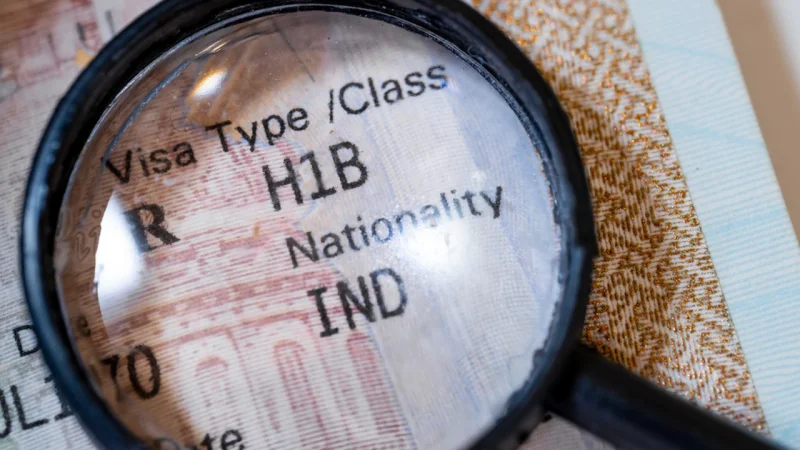
Rep. Chip Roy introduced the American White-Collar Worker Jobs Act on June 4, a bill that would shut off the H-1B visa’s path to a green card and end OPT, the work program used by international students after graduation.
The Texas Republican is pitching the measure as a way to put American workers first, especially in STEM fields, where he says foreign labor has too often been used to hold down pay and push aside domestic applicants. The legislation also would require H-1B applicants to show they maintain a residence abroad and do not intend to abandon it, tightening a system that already sits at the center of a long-running political fight.
H-1B visas let U.S. employers hire foreign workers in specialized jobs in medicine, engineering and technology, and the program has drawn criticism from workers’ advocates who say it depresses wages and disadvantages Americans. Supporters argue it fills essential gaps in high-skilled industries, but Roy’s bill is aimed at cutting one of the program’s most valuable routes: the ability to move from temporary work status into permanent residency.

Roy said the H-1B system has been abused for nearly forty years and that employers have routinely sidelined American STEM workers in favor of cheap foreign labor, masking layoffs and wage suppression as shortages. The bill is backed by U.S. Tech Workers, the Immigration Accountability Project and the Federation for American Immigration Reform, and Eli Crane, one of its cosponsors, said it delivers significant reforms that protect future generations instead of padding bottom lines at their expense.
That message runs into a political contradiction that has hovered over the debate for months. In November 2025, Donald Trump said H-1B visas were needed because you have to bring in talent, a position that cuts against the bill’s premise that the program should be curtailed. He has also said people do not have certain talents, people have to learn and you cannot take people off an unemployment line and put them into a factory to make missiles.
Even with Republican control of the House, where the party holds 217 seats to Democrats’ 212, along with one independent and five vacancies, the bill faces long odds. The narrow margin leaves little room for defections, and it is unlikely to win over moderate Republicans or Democrats, even as there is bipartisan appetite in Congress for some form of H-1B reform. The Trump administration has already tightened legal migration rules, prioritized higher wages for H-1B applicants and imposed a $100,000 fee on new petitions, but Roy’s measure goes much further.
For now, the bill’s fate turns on whether House Republicans treat it as a message vote or a serious attempt to rewrite one of the main pipelines linking foreign graduates and skilled workers to U.S. employers. The next step is congressional consideration, but the arithmetic in the House makes passage look remote.