


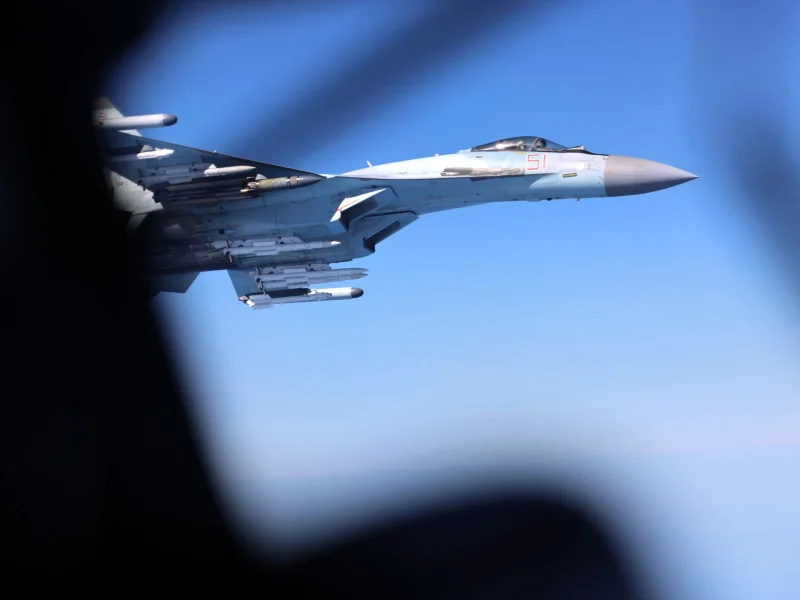
Two Russian warplanes repeatedly and dangerously intercepted an unarmed RAF Rivet Joint aircraft over the Black Sea last month, with one fighter triggering the spy plane’s emergency systems and another closing to within six metres of its nose. Britain said the encounter was the most dangerous Russian action against the aircraft since 2022.
The Ministry of Defence said a Russian Su-35 approached the Rivet Joint surveillance aircraft and disabled its autopilot by setting off emergency systems, while a Su-27 then made six passes in front of the plane. The aircraft was on a routine international flight supporting Nato’s eastern flank when the incident unfolded.
Defence Secretary John Healey said the episode showed “outstanding professionalism” by the RAF crew, but he called the Russian pilots’ conduct “unacceptable” and a serious risk to safety. “This incident is another example of dangerous and unacceptable behaviour by Russian pilots, towards an unarmed aircraft operating in international airspace,” he said. “These actions create a serious risk of accidents and potential escalation.”

The Ministry of Defence and the Foreign Office called on the Russian embassy to condemn the incident. Britain did not treat the encounter as isolated: it came after a similar Black Sea episode in September 2022, when a Russian pilot fired two missiles at an RAF Rivet Joint plane. Russia later described that earlier incident as a technical malfunction.
The RC-135W Rivet Joint is operated by No 51 Squadron and usually flies out of a base in Lincolnshire. It carries advanced sensors that intercept and analyse signals across the electromagnetic spectrum, giving British and allied commanders real-time strategic and tactical intelligence. That is what made last month’s encounter more than a dangerous near miss: it involved an aircraft central to Nato surveillance at a time when London says Russian aggression in the region is increasing.
Healey said the latest intercept would not change Britain’s posture. “This incident will not deter the UK’s commitment to defend Nato, our allies and our interests from Russian aggression,” he said. For the crews who fly these missions, the judgment in Whitehall is already clear: Russian pilots are prepared to take risks that could have turned a routine patrol into a catastrophe.
